Best Solar Generator Under : Top 2000Wh Picks (2026)
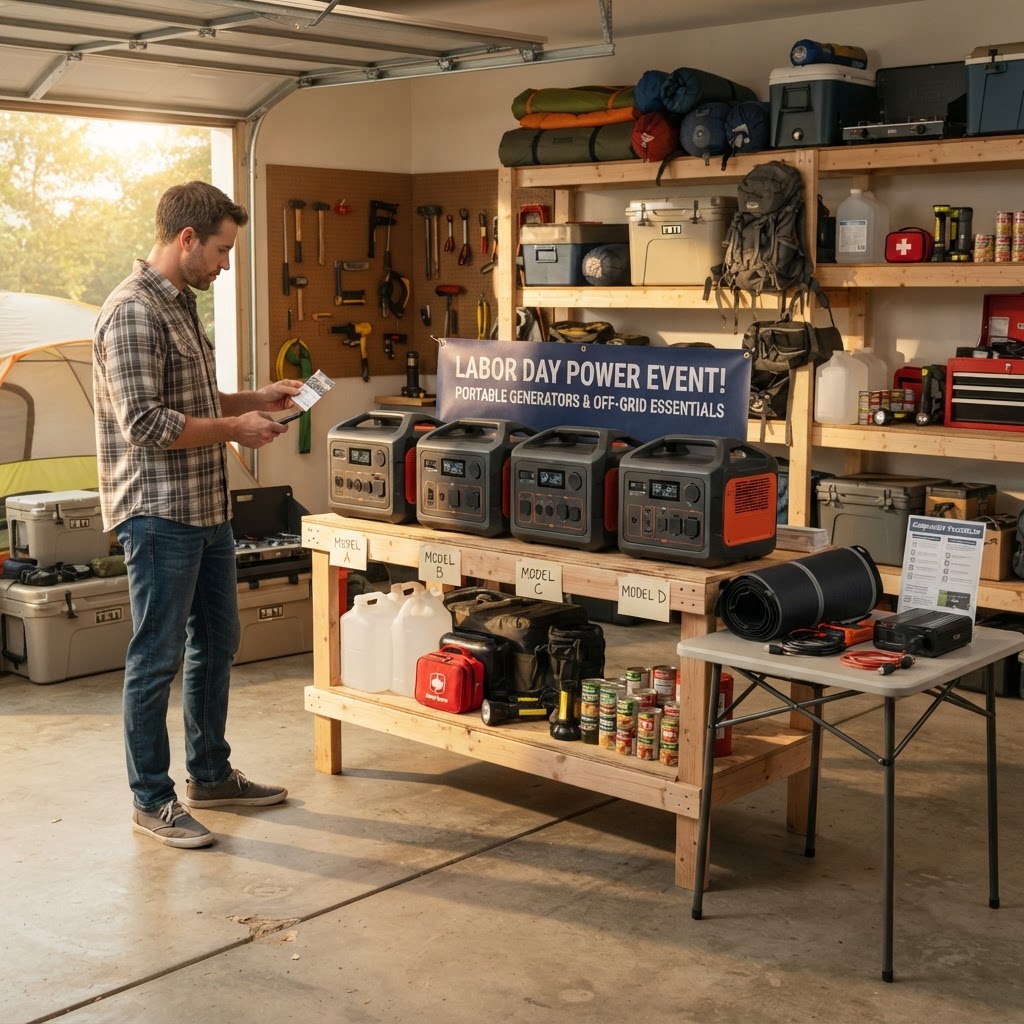
Find the best solar generator under . Compare 2000Wh power stations from EcoFlow, Jackery, and more. Save big this Labor Day with our value guide!
Affiliate disclosure: As an Amazon Associate I earn from qualifying purchases. We may earn a commission from purchases made through our links, at no extra cost to you.
Top Picks This Round
EcoFlow DELTA 2 Max
The gold standard for mid-sized power stations, combining a 2048Wh capacity with industry-leading 1.1-hour AC charging speeds and a 10-year lifespan.
- +X-Stream lightning-fast charging
- +Expandable up to 6kWh
- +Advanced app ecosystem
Jackery Explorer 2000 Plus
Designed for mobility, this 2042Wh unit features integrated wheels and a suitcase-style handle, making it the top choice for campsite transport.
- +Built-in wheels and telescopic handle
- +Whisper-quiet operation under 30dB
- +Supports up to 5 add-on batteries
Anker SOLIX F2000 (PowerHouse 767)
Utilizing GaNPrime technology for maximum efficiency, this unit provides cooler operation and features a dedicated TT-30 RV port.
- +High-efficiency GaN technology
- +Includes a dedicated 30A RV port
- +Extremely durable unibody construction
Bluetti AC200L
A powerful successor to the AC200 series featuring a 2400W AC inverter and a seamless 20ms UPS mode for reliable home backup.
- +Impressive 2400W power lifting mode
- +Ultra-reliable LiFePO4 chemistry
- +Silent charging mode options
The short answer: if I were trying to buy the best solar generator under during Labor Day sales, I’d start with the EcoFlow DELTA 2 Max for the best mix of capacity, charge speed, expandability, and everyday usability. If price matters most, the Pecron E2000LFP gives you real 2kWh-class capacity for a lot less money than the big-name alternatives.
A 2000Wh power station sits in a sweet spot. It’s big enough to keep a fridge alive through an outage, run a CPAP for multiple nights, or cover a full weekend in an RV without feeling tiny the second you plug things in. But it’s still small enough that one person can move it around the house, garage, or campsite without turning the whole thing into a back injury project.
For this roundup, I’m looking at what actually matters in an affordable 2000Wh power station: usable battery size, inverter muscle, charging speed, solar input, noise, and whether the price still makes sense once the Labor Day discounts settle in. One important reality check: a 2kWh unit is not a true whole-house backup system, even if some listings hint at that. Think of this category more as essential-circuit backup or a large portable power station, not a full-home replacement for a standby system.
I also want to be clear about how these picks were made. This site has not hands-on tested these units. I’m basing this list on manufacturer specs, official product documentation, and verified customer-review patterns, then comparing them the way a real buyer would when trying to stretch a limited budget.
Quick Comparison
| Product | Best For | Key Spec | value tiers |
|---|---|---|---|
| EcoFlow DELTA 2 Max | Best overall | 2048Wh with 1.1-hour AC charging | Premium |
| Jackery Explorer 2000 Plus | Best for RV / van life | 2042Wh with wheels and telescopic handle | Premium |
| Anker SOLIX F2000 (PowerHouse 767) | Best premium | GaNPrime platform with 30A RV port | Premium |
| Bluetti AC200L | Best for home backup | 2400W inverter with 20ms UPS mode | Mid-range |
| BougeRV Fort 2500 | Best for CPAP | 2264Wh capacity | Mid-range |
| Oukitel P2001 Plus | Best for job sites | 2400W AC output with 1.8-hour wall charging | Budget |
| Pecron E2000LFP | Best budget | 1920Wh with 1200W solar input | Budget |
1. EcoFlow DELTA 2 Max — Best overall
If you want the safest all-around pick in this class, the EcoFlow DELTA 2 Max is the one I’d put at the top. On paper, it hits the balance that a lot of brands miss: 2048Wh capacity, very fast AC charging, room to expand later, and an app ecosystem that’s actually useful instead of just being something a brand adds to the box. For someone shopping the best 2kWh solar generator 2026 deals, this is the model that makes the fewest compromises.
The big reason it lands here is flexibility. It works for outage backup, road trips, and general home use without feeling overly specialized. Compared with the Jackery Explorer 2000 Plus, it gives up the built-in wheels, but it charges much faster and feels more future-proof if you think you may add capacity later. Compared with the Bluetti AC200L, it leans more toward fast daily usability and less toward fixed home-backup duty.
The trade-off is that EcoFlow’s speed comes with fan noise when you’re charging hard, and the expansion side of the system isn’t as universal as I’d like because of the proprietary cable setup. Still, if I wanted one unit to cover the widest range of needs under this price ceiling, this is the one.
Pros:
- Very fast X-Stream charging saves a lot of waiting time
- Expandable up to 6kWh if your needs grow later
- The app and software side are more polished than most rivals
Cons:
- The cooling fans are easy to hear during maximum charging
- Expansion batteries rely on proprietary cable hardware
2. Jackery Explorer 2000 Plus — Best for RV / van life
The Jackery Explorer 2000 Plus makes the most sense for people who move their power station a lot. Built-in wheels and a telescoping handle sound like small details until you’ve had to drag a 2kWh box across gravel, campground pads, or a parking area. If your solar generator lives in an RV, van, or toy hauler instead of one corner of the house, that mobility feature matters more than spec-sheet bragging rights.
I also like the fact that it runs quietly. That’s a big plus in van life or close-quarter camping, where fan noise gets annoying fast. Against the Anker SOLIX F2000, the Jackery feels less rugged and a bit less performance-focused, but it’s easier to live with when you care about transport and quieter operation. Against the EcoFlow DELTA 2 Max, you’re mostly trading charging speed for portability and low noise.
The catch is price. It usually sits near the top of this bracket, and its solar charging pace isn’t as aggressive as some competitors. So I’d pick it when your priority is moving the unit often, not when you’re chasing the absolute best watt-hour-per-dollar value.
Pros:
- Built-in wheels and a suitcase-style handle make transport easier
- Very quiet operation, often below 30dB
- Can grow with up to 5 extra battery packs
Cons:
- Usually one of the most expensive options in this range
- Solar charging is slower than some competing models
3. Anker SOLIX F2000 (PowerHouse 767) — Best premium
If you want the nicest-feeling machine in this group and you’re okay spending close to the top of the budget, the Anker SOLIX F2000 (PowerHouse 767) is my premium pick. Anker’s GaNPrime angle isn’t just marketing fluff here; the main practical upside is cooler, more efficient operation. Add the dedicated 30A RV port and sturdy unibody design, and this unit starts to make sense for buyers who care as much about build and finish as raw numbers.
Compared with the Jackery Explorer 2000 Plus, the Anker is the more serious RV-capable machine because of that 30A port. Compared with the EcoFlow DELTA 2 Max, it feels more like a rugged appliance and less like a software-first system. If you want something that looks and feels durable right out of the gate, the Anker has a strong case.
What keeps it from taking the overall crown is value. Per watt-hour, it’s not the cheapest way into a big battery, and some buyers report that app setup takes more patience than it should. Still, if your Labor Day budget allows you to prioritize refinement and RV convenience, this is the premium play.
Pros:
- GaN-based design helps with efficiency and cooler operation
- Includes a dedicated 30A RV port instead of making you work around adapters
- The unibody build looks and feels unusually tough
Cons:
- You pay more per watt-hour than with value-focused rivals
- The app onboarding can be a little finicky
4. Bluetti AC200L — Best for home backup
The Bluetti AC200L is the one I’d lean toward if your main job for this battery is sitting ready for outages at home. A 2400W inverter gives it a little more breathing room for demanding appliances than some 2kWh units, and the 20ms UPS mode makes it better suited for backup duty than models aimed mostly at camping. If you’re comparing a budget whole house solar generator idea against reality, this is closer to an essentials backup hub for a fridge, modem, lights, and some kitchen loads.
Compared with the EcoFlow DELTA 2 Max, the Bluetti feels more home-oriented and less all-about-speed. Compared with the Oukitel P2001 Plus, it’s the more polished backup choice even if it isn’t the cheapest. I also like the silent charging mode option because a power station in a hallway, office, or bedroom gets old fast if it sounds like a shop vac every time you top it up.
The downside is simple: it’s heavy and a little awkward. At 62 pounds with a boxy shape, it’s not the one I’d choose if you’re hauling it in and out of a vehicle every weekend. But for staying put near your outage gear, the AC200L is a smart middle-ground value.
Pros:
- Power lifting mode and 2400W inverter give it useful headroom
- LiFePO4 battery chemistry is built around long service life
- Silent charging options are nice for indoor use
Cons:
- Heavy at around 62 pounds
- The boxy body is not the easiest shape to stack or store neatly
5. BougeRV Fort 2500 — Best for CPAP
The BougeRV Fort 2500 earns its spot mainly because capacity matters a lot for overnight medical-device use, and 2264Wh is more battery than most units in this price band. If your biggest concern is keeping a CPAP going through long outages or multiple nights away from the wall, more watt-hours usually matter more than fancy app extras or flashy charging claims.
Against the Pecron E2000LFP, you’re paying more, but you do get more stored energy. Against the Bluetti AC200L, the BougeRV has the edge on raw battery size, while the Bluetti feels more like the stronger all-around home appliance runner. That difference matters. A CPAP-focused buyer may care more about overnight endurance than about the last bit of inverter performance.
I wouldn’t call it the most aggressive solar machine in the group since input tops out at 700W, and that can be limiting if you’re trying to recover quickly from deeper discharges on poor-weather days. But for one specific mission, long runtimes, this one makes a lot of sense.
Pros:
- Larger-than-average 2264Wh capacity stretches runtimes
- Protective aluminum alloy shell adds some real-world toughness
- The LCD screen is easy to read at a glance
Cons:
- 700W solar input is modest for a battery this size
- Support response has been a weak spot for some buyers
6. Oukitel P2001 Plus — Best for job sites
The Oukitel P2001 Plus looks like what it is: a workhorse. For job-site use, I care less about sleek styling and more about whether the unit can deliver real AC output, recharge fast, and survive getting shoved around a dusty trailer or garage. The Oukitel checks those boxes with 2400W continuous output, adjustable input wattage control, and a relatively quick 1.8-hour wall charge.
Compared with the Bluetti AC200L, it’s the more stripped-down, utility-first option. Compared with the EcoFlow DELTA 2 Max, it’s less refined but also easier to justify when the main mission is running tools, chargers, and rougher-duty gear without overspending. I especially like adjustable charge input on a unit like this because job sites and shared circuits aren’t always ideal for max-draw charging.
The trade-offs are exactly what you’d expect. It’s heavy, and fan noise climbs when you’re really leaning on it. So I’d buy this one for utility spaces, vans, workshops, and mobile work setups, not for a quiet bedroom backup corner.
Pros:
- Adjustable charging input gives you more control on weak circuits
- 2400W continuous AC output is solid for tools and heavier loads
- Fast wall charging for a unit in this price range
Cons:
- Heavier than some similarly sized alternatives
- Fan noise gets loud at full output
7. Pecron E2000LFP — Best budget
If your goal is simple value, the Pecron E2000LFP is the easy budget winner. Getting 1920Wh of LFP battery capacity at this value tiers is hard to ignore, especially when some competing models cost several hundred dollars more before you’ve even added solar panels. For anyone hunting an affordable 2000Wh power station without paying for brand prestige, this is the one to look at first.
What makes it more than just a cheap pick is that the compromises are mostly convenience-related, not mission-killing. The lack of app support will bother some buyers, but there are plenty of people who actually prefer a power station with straightforward on-unit controls and no extra software layer. Compared with the EcoFlow DELTA 2 Max, it’s obviously less polished. Compared with the BougeRV Fort 2500, it has less battery capacity. But on straight value per watt-hour, the Pecron is hard to beat.
The 1200W solar input support is also a bigger deal than the price suggests. That gives it better recovery potential than some buyers expect from a budget model. If I were building a low-cost emergency kit or entry-level solar generator setup, this is the best value large portable power station in the bunch.
Pros:
- Very hard to beat on price for near-2kWh LFP capacity
- Supports up to 1200W of solar input through dual plugs
- Plenty of output options with 16 ports
Cons:
- No wireless app support
- The design is more industrial than polished
How I Picked These
I didn’t build this list around marketing slogans. I looked at the stuff that matters once the lights go out or you’re living off the battery for a couple of days.
First, I care about capacity in watt-hours and inverter output in watts together. A 2000Wh battery sounds big until you pair it with a weak inverter that can’t actually start or run the appliances you care about. Second, I pay attention to battery chemistry. LiFePO4 usually wins for cycle life and long-term value, while other chemistries can sometimes save weight but often give up lifespan.
After that, I look at solar input, because a large battery that recharges slowly can feel a lot smaller in real use. Then there’s portability: wheels, handles, weight, and shape all matter more in the real world than brands like to admit. Last, I compare value per watt-hour and overall feature set, because the best solar generator under should still feel like a smart buy after the holiday sale banners disappear.
Things to Watch Out For
1. Confusing Wh with W. Watt-hours tell you how long the battery can run. Watts tell you how much load the inverter can handle at one time. You need both numbers to make a smart choice.
2. Falling for peak output instead of continuous output. Some listings push surge or peak numbers because they look impressive. What matters for most appliances and tools is the continuous AC rating.
3. Ignoring solar input limits. A 2kWh battery paired with weak solar input can take a long time to recover, especially in shoulder seasons or bad weather. Bigger battery plus tiny solar input is a frustrating combo.
4. Assuming every 2000Wh unit can run power-hungry tools. Microwaves, space heaters, compressors, and shop tools can trip lower inverters fast. Check the inverter ceiling before you assume any large power station is job-site ready.
5. Expecting advertised runtime in the real world. You never get every last watt-hour back out through AC. Inverter losses, temperature, and cycling behavior all eat into runtime, so build in margin.
Frequently Asked Questions
Can I run a refrigerator with a 2000Wh solar generator?
Yes, usually you can. A 2000Wh-class unit is commonly enough for a modern fridge for many hours, but the exact runtime depends on the fridge’s startup surge, duty cycle, and ambient temperature.
Is a 2000Wh power station enough for home backup?
Yes, for essentials it often is. It’s enough for a fridge, lights, router, phones, and some small appliances, but it is not a full whole-house backup solution.
What’s the best battery chemistry in this price range?
LiFePO4 is usually the best choice. It tends to offer longer cycle life and better long-term value, which matters a lot in a large battery you plan to keep for years.
How much solar do I need to recharge a 2kWh power station?
Around 400W to 800W is a practical starting point, and more can be better if the unit accepts it. The real answer depends on the station’s solar input limit, weather, season, and how fast you need the battery refilled.
Which model here is the best value if I’m trying to spend the least?
The Pecron E2000LFP is the best budget value. It gives you near-2kWh capacity and strong solar input support for well under what the premium brands usually charge.
The Verdict
Best overall: EcoFlow DELTA 2 Max — the best mix of usable capacity, very fast charging, expandability, and everyday convenience. Check today’s prices on Amazon →
Best budget: Pecron E2000LFP — the easiest way to get real 2kWh-class storage without blowing the budget. Check today’s prices on Amazon →
Best premium: Anker SOLIX F2000 (PowerHouse 767) — the nicest premium build here, with strong RV appeal thanks to the 30A port. Check today’s prices on Amazon →
Related Guides
- Best 1000Wh Power Stations for Home Backup
- LiFePO4 vs NMC Batteries: Which Lasts Longer?
- How to Size a Solar Generator for an RV
- Best Portable Power Stations for CPAP Use During Outages
All Featured Products
EcoFlow DELTA 2 Max
The gold standard for mid-sized power stations, combining a 2048Wh capacity with industry-leading 1.1-hour AC charging speeds and a 10-year lifespan.
- +X-Stream lightning-fast charging
- +Expandable up to 6kWh
- +Advanced app ecosystem
Jackery Explorer 2000 Plus
Designed for mobility, this 2042Wh unit features integrated wheels and a suitcase-style handle, making it the top choice for campsite transport.
- +Built-in wheels and telescopic handle
- +Whisper-quiet operation under 30dB
- +Supports up to 5 add-on batteries
Anker SOLIX F2000 (PowerHouse 767)
Utilizing GaNPrime technology for maximum efficiency, this unit provides cooler operation and features a dedicated TT-30 RV port.
- +High-efficiency GaN technology
- +Includes a dedicated 30A RV port
- +Extremely durable unibody construction
Bluetti AC200L
A powerful successor to the AC200 series featuring a 2400W AC inverter and a seamless 20ms UPS mode for reliable home backup.
- +Impressive 2400W power lifting mode
- +Ultra-reliable LiFePO4 chemistry
- +Silent charging mode options
BougeRV Fort 2500
Boasting a massive 2264Wh capacity in a compact frame, this unit offers the longest runtime for medical devices like CPAPs during extended outages.
- +Higher than average 2264Wh capacity
- +Rugged aluminum alloy protective shell
- +Clear, high-contrast LCD display
Oukitel P2001 Plus
A rugged workhorse built for the job site, offering adjustable AC charging speeds and a heavy-duty chassis to withstand dust and debris.
- +Adjustable input wattage control
- +High 2400W continuous AC output
- +Fast 1.8-hour wall charging
Pecron E2000LFP
The ultimate value-to-capacity king, providing a full 1920Wh of LFP power for under a thousand dollars without sacrificing port variety.
- +Unbeatable price for 2kWh capacity
- +Dual-plug 1200W solar input support
- +16 versatile output ports
Frequently Asked Questions
Can I run a refrigerator with a 2000Wh solar generator?
Yes, usually you can. A 2000Wh-class unit is commonly enough for a modern fridge for many hours, but the exact runtime depends on the fridge’s startup surge, duty cycle, and ambient temperature.
Is a 2000Wh power station enough for home backup?
Yes, for essentials it often is. It’s enough for a fridge, lights, router, phones, and some small appliances, but it is not a full whole-house backup solution.
What’s the best battery chemistry in this price range?
LiFePO4 is usually the best choice. It tends to offer longer cycle life and better long-term value, which matters a lot in a large battery you plan to keep for years.
How much solar do I need to recharge a 2kWh power station?
Around 400W to 800W is a practical starting point, and more can be better if the unit accepts it. The real answer depends on the station’s solar input limit, weather, season, and how fast you need the battery refilled.
Which model here is the best value if I’m trying to spend the least?
The Pecron E2000LFP is the best budget value. It gives you near-2kWh capacity and strong solar input support for well under what the premium brands usually charge.