Best Solar Generator for Sump Pump & Fridge (2026 Prep)
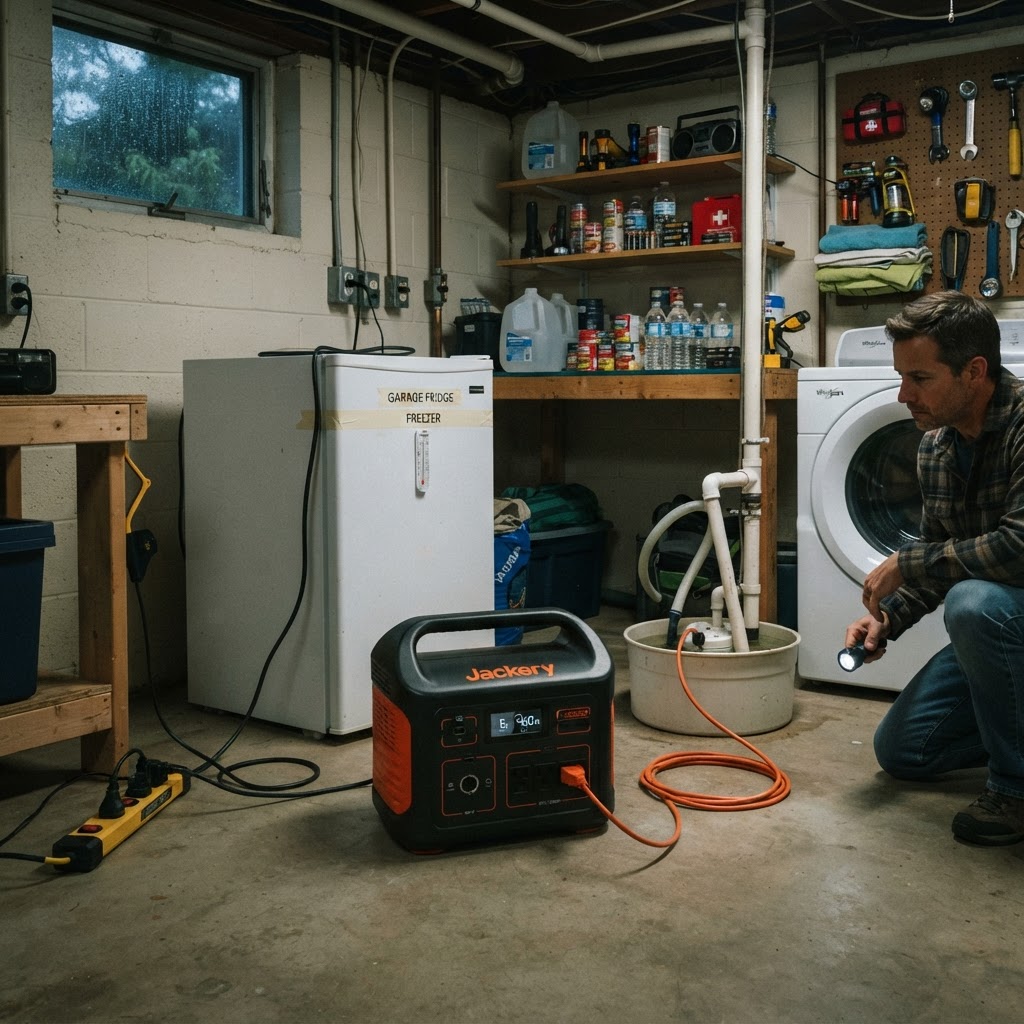
Finding the best solar generator for sump pump backup? Compare top 2000W units for 2026 hurricane season to keep your basement dry and fridge cold.
Affiliate disclosure: As an Amazon Associate I earn from qualifying purchases. We may earn a commission from purchases made through our links, at no extra cost to you.
Top Picks This Round
Jackery Explorer 2000 Plus
A rugged, expandable power station designed for long-term reliability and hurricane backup with high-efficiency solar charging capabilities.
- +Expandable up to 24kWh
- +Excellent build quality and durability
- +Comprehensive 5-year warranty
EcoFlow Delta 2 Max
A high-performance LFP powerhouse featuring industry-leading 80-minute fast charging and a 2400W AC output capable of handling heavy sump pump surges.
- +Hyper-fast AC and solar charging
- +Quiet 30dB operation
- +LFP battery with 10-year lifespan
Anker SOLIX F2000 (C1000)
Utilizing GaNPrime technology, this unit offers efficient power delivery and integrated wheels for easy transport to flood-prone basements.
- +Integrated suitcase-style wheels
- +InfiniPower long-lasting design
- +Hyper-fast GaN charging
Bluetti AC200L
The evolution of the AC200 series featuring a 20ms UPS mode to keep sump pumps active immediately during a power failure.
- +Seamless UPS functionality
- +Massive 2400W continuous output
- +NEMA TT-30 port for RV use
The short answer: for most people, the EcoFlow Delta 2 Max is the best solar generator for sump pump backup because it gives you strong surge handling, fast recharging, quiet operation, and enough output headroom to cover a fridge at the same time. If your biggest worry is a basement pump switching over cleanly the second utility power drops, the Bluetti AC200L is the one I’d look at hardest.
When I’m helping somebody shop for hurricane prep, I try to keep the conversation simple: a sump pump is not the same kind of load as a phone charger or TV, and a fridge adds another layer because it cycles on and off all day. That’s why this list sticks to the 2000W class. For backup power for sump pump during hurricane season, this is the size range where you stop guessing and start getting realistic whole-appliance coverage.
I also think people get tripped up by marketing language. A 2000W solar generator for home backup is not just about the battery size. You need enough continuous inverter output to run the gear, enough surge tolerance to start the pump, and enough battery capacity to matter once the outage stretches past a couple of hours. If you have an emergency power for flood prone basement scenario, those details matter more than flashy app features.
One quick note before I get into the picks: this roundup is based on manufacturer specs, official product documentation, and verified customer-review patterns across major retailers. I’m not claiming hands-on testing here, and I’m not going to pretend a spec sheet tells the whole story. What it can do is help narrow down which units actually make sense for a sump pump and fridge setup.
Quick Comparison
| Product | Best For | Key Spec | value tiers |
|---|---|---|---|
| Jackery Explorer 2000 Plus | Best premium | Expandable up to 24kWh | Premium |
| EcoFlow Delta 2 Max | Best overall | 2400W AC output | Premium |
| Anker SOLIX F2000 (C1000) | Best for mobility | Integrated wheels | Premium |
| Bluetti AC200L | Best for sump pumps | 2400W continuous output | Mid-range |
| Zendure SuperBase Pro 2000 | Best for smart monitoring | Built-in 4G and WiFi | Mid-range |
| VTOMAN Jump 2200 | Best for car & home | Jump-start capability | Mid-range |
| Pecron E2000LFP | Best budget | 1920Wh LFP battery | Budget |
1. Jackery Explorer 2000 Plus — Best premium
If I were buying with long outages in mind and I knew I might want to grow the system later, the Jackery Explorer 2000 Plus would be near the top of my list. The big reason is expandability. A sump pump and fridge can be manageable for a day, but hurricane outages don’t always read the plan. Being able to scale this unit up to 24kWh makes it more than a one-weekend emergency box.
This is also the kind of power station I’d point to for someone who values durability and a clear long-term ownership story. Jackery gives it a solid reputation for fit and finish, and the 5-year warranty helps justify the premium price. Compared with the EcoFlow Delta 2 Max, I think the Jackery makes more sense if expansion matters more than recharge speed. Compared with the Bluetti AC200L, it feels more like a long-haul home-backup platform than a sump-pump-specialist pick.
The trade-off is simple: cost and weight. At 61 pounds, this is not the unit I’d want to carry up and down basement stairs often. If you need something to move around during storm prep, the Anker or Zendure are easier to live with.
Pros:
- Expandable all the way up to 24kWh for serious outage planning
- Rugged build and a reputation for holding up well over time
- Backed by a full 5-year warranty
Cons:
- Costs more than most of the competition in this class
- Heavy at 61 pounds, so it is not especially easy to move
2. EcoFlow Delta 2 Max — Best overall
The EcoFlow Delta 2 Max is the one I’d recommend first to most people asking for the best solar generator for sump pump duty. It hits the middle of the target better than anything else here: enough AC output for demanding appliances, very fast charging, quiet operation, and an LFP battery platform built for years of use. For a combined sump pump and refrigerator setup, that balance matters more than any one headline feature.
One reason this model stands out during hurricane prep is how quickly you can top it off before the storm or between outages. Hyper-fast AC charging is genuinely useful when the forecast changes and you need to get ready in a hurry. It also helps with solar recovery when skies open up again. Compared with the Jackery Explorer 2000 Plus, it is less about massive expansion and more about speed and convenience right now. Compared with the Bluetti AC200L, it gives up the more sump-pump-focused UPS story but wins on noise and recharge pace.
A lot of people specifically ask about EcoFlow Delta 2 Max sump pump runtime. The honest answer is that runtime depends mostly on how often your pump cycles, how large the pump motor is, and whether the fridge is running at the same time. In a real outage, those cycling loads matter more than the model name. What I like here is the 2400W AC output headroom, which gives you a better shot at handling startup surges without living on the edge.
Pros:
- Very fast AC and solar charging when time matters
- Quiet operation at around 30dB in light-use situations
- LFP battery chemistry aimed at a long service life
Cons:
- You need the app to access the full feature set
- Solar input tops out at 1000W, which may limit bigger panel plans
3. Anker SOLIX F2000 (C1000) — Best for mobility
The Anker SOLIX F2000 (C1000) earns its spot mainly because moving a power station is a real part of hurricane prep that spec tables tend to ignore. If your basement is the danger zone, wheels matter. Suitcase-style mobility sounds minor until you’re trying to reposition 50-plus pounds around storage bins, a utility sink, or a wet floor.
I’d put this one in front of anybody who wants a serious backup unit but doesn’t want to wrestle it every time storms roll in. Compared with the Jackery Explorer 2000 Plus and Bluetti AC200L, it feels more practical for frequent moving. Compared with the Zendure SuperBase Pro 2000, it is less about remote monitoring and more about straightforward physical usability.
The downside is that expansion is a little more closed-off, and the footprint is not tiny for what you’re getting. So if your setup is going to stay parked in one spot, I think the EcoFlow or Bluetti make a cleaner case. But if the job includes getting a unit to a flood-prone basement fast, the built-in wheels are not a gimmick.
Pros:
- Integrated wheels make it much easier to move than most units in this class
- Long-life InfiniPower design is aimed at durability
- Fast GaN-based charging helps when you need a quick refill
Cons:
- Expansion battery connections are proprietary
- Takes up a fair amount of floor space for its capacity class
4. Bluetti AC200L — Best for sump pumps
If your sump pump is the whole reason you’re shopping, the Bluetti AC200L is the most targeted pick here. The feature that pushes it forward is the 20ms UPS mode. For a basement protection setup, that matters because the unit is built around keeping power transfer quick when the grid drops. In a storm, that handoff can be more important than a flashy screen or a phone app.
The other big point in its favor is output. With 2400W continuous power, it has real room for demanding loads, and that makes it easier to pair a sump pump with a refrigerator without feeling like you’re right at the ceiling. If somebody asks me how many watts for a refrigerator and sump pump, my practical answer is that a 2000W-class station is the minimum zone I’d trust, and 2400W output is even better because pump startups are unpredictable. Versus the EcoFlow Delta 2 Max, this one is more basement-first. Versus the Jackery, it is less about big expansion and more about immediate outage behavior.
The trade-off is that it can get loud under load, and it is still a bulky unit to grab by the handles. So I like it best when it will mostly stay in place near the equipment it’s protecting.
Pros:
- UPS functionality is well suited to outage-sensitive sump pump duty
- Strong 2400W continuous output for pumps plus fridge loads
- Includes a NEMA TT-30 port if you also want RV flexibility
Cons:
- Fan noise can be noticeable when you push it hard
- The handle setup makes the unit feel bulky to carry
5. Zendure SuperBase Pro 2000 — Best for smart monitoring
The Zendure SuperBase Pro 2000 is the pick I’d consider if you care a lot about visibility during an outage. Built-in 4G and WiFi monitoring is genuinely useful when you are away from the house or checking on a second property. For hurricane season, being able to keep tabs on unit status without standing next to it is a real advantage.
I also like that this one is designed with serious wheels and handles. In that sense, it overlaps a bit with the Anker SOLIX F2000 (C1000), but the reason to buy it is different. The Anker is the better pure mobility choice. The Zendure is the one for people who want mobility plus remote oversight. Dual PV input is another nice touch if you plan to lean harder on solar charging than some of the other mid-priced options allow.
The catch is software maturity. Firmware complaints come up often enough that I would not buy this if you hate tinkering or want a totally set-it-and-forget-it experience. Customer support response is also less consistent than what I’d want in a premium-feeling emergency tool.
Pros:
- Built-in 4G and WiFi make remote monitoring easier during storms
- Sturdy wheels and handles are built for real movement
- Dual PV input can speed up solar recovery
Cons:
- Firmware updates can sometimes be fussy
- Support response times are not always predictable
6. VTOMAN Jump 2200 — Best for car & home
The VTOMAN Jump 2200 is the most multi-role pick in this lineup. If you want one box that can help with home backup and also has a jump-start function for a vehicle, it covers a wider emergency-prep brief than the others. That won’t matter to everyone, but in hurricane country I know plenty of people who care just as much about a dead SUV battery as they do a refrigerator cycling overnight.
Its Constant Power feature is the real hook for appliance users. Fridges can be finicky on startup, and anything that helps prevent nuisance overloads is worth paying attention to. Compared with the Pecron E2000LFP, the VTOMAN gives you more emergency versatility. Compared with the EcoFlow Delta 2 Max, it is less refined and slower to recharge, but also easier to justify if you want that car-and-home overlap.
I would not call it the sleekest or most polished option here. The display is basic, and slower AC charging means it is not the first pick if fast turnaround is your priority. But if your storm kit needs to do more than one job, it makes sense.
Pros:
- Can jump-start a vehicle in addition to home backup duties
- Constant Power feature helps with higher-wattage appliance loads
- Supports two expansion battery paths for added flexibility
Cons:
- The standard LCD does not show as much detail as some rivals
- AC charging is slower than the quickest options here
7. Pecron E2000LFP — Best budget
If cost is the deciding factor, the Pecron E2000LFP is the budget pick I’d start with. It gets you into the right general class for sump pump and fridge backup without asking premium money, and that matters because plenty of families want hurricane insurance they can actually afford. A lot of cheaper stations look tempting until you realize they fall short on output or battery size. This one at least stays in the conversation.
The value angle is strongest when you compare it directly with the Bluetti AC200L or EcoFlow Delta 2 Max. You give up polish, app features, and some convenience, but the price-to-performance picture is much better. The 1920Wh LFP battery, 2000W power rating, and 16 outputs make it more practical than most bargain-bin alternatives. For someone building a first emergency setup, simple can be a good thing.
The downsides are exactly what you’d expect at the lower tier. No app means less remote oversight, and the external charging brick is one more bulky piece to store. Still, for a best solar generator for sump pump pick on a tighter budget, this is the one I’d rather recommend than something underpowered that leaves you disappointed when the weather gets ugly.
Pros:
- Very strong value for the money in this size class
- Lots of output ports for running several smaller devices alongside appliances
- Simple interface without extra distractions
Cons:
- No mobile app or remote monitoring features
- The external charging brick is bulky and not especially elegant
How I Picked These
I picked these the same way I’d narrow the field for a friend who needs storm backup: by looking at what actually matters once the lights go out, not by chasing the longest feature list. The first thing I care about is the difference between watt-hours and watts. Battery capacity tells you how long the unit might last. Inverter output tells you whether it can even run the sump pump and fridge in the first place.
I also gave extra weight to battery chemistry. LiFePO4 usually makes more sense for home backup because it tends to offer longer cycle life and better long-term value than older chemistries. That is not the only factor, but for a unit that may sit ready for hurricane season year after year, I think it matters.
From there, I looked at solar input, recharge speed, portability, and value per watt-hour. A unit can have decent output and still be annoying to live with if it takes forever to recharge, is too awkward to move to a basement, or costs premium money without giving you a clear advantage. I also paid attention to manufacturer documentation and verified customer-review patterns to spot recurring strengths and recurring complaints.
Things to Watch Out For
1. Confusing watt-hours with watts
A direct answer: watts run the appliance, watt-hours determine runtime. A 2000Wh-class battery means nothing if the inverter cannot handle the sump pump’s startup demand.
2. Looking at peak power instead of continuous output
A direct answer: continuous output is the number that matters most. Peak or surge figures can help with motor starts, but you do not want to buy a station that only looks good on a burst rating.
3. Assuming any 2000W unit can run any pump
A direct answer: not all sump pumps behave the same way. Older pumps, larger pumps, and pumps under heavy water load can hit much harder on startup than the label suggests.
4. Ignoring solar input limits
A direct answer: bigger panels do not help if the power station caps solar input early. This matters if you expect to recharge during multi-day outages instead of treating the unit like a one-night battery.
5. Believing advertised runtime without thinking about cycling loads
A direct answer: real-world runtime is usually shorter than the dream scenario in ads. A fridge cycles, a sump pump cycles, inverter losses exist, and storm conditions are rarely ideal.
Frequently Asked Questions
What size solar generator do I need for a sump pump and refrigerator?
The direct answer: start in the 2000W class, not below it. For most homes, that is the safer starting point for running both loads together and dealing with pump startup surges.
How many watts for a refrigerator and sump pump?
The direct answer: many households should plan around a 2000W to 2400W inverter for this combo. The exact number depends on the sump pump motor and startup surge, which is often the hardest part of the load.
Can a 2000W solar generator start a sump pump?
The direct answer: yes, many can, but not all pumps are equal. You need enough surge headroom and a unit with a solid inverter, which is why the EcoFlow Delta 2 Max and Bluetti AC200L stand out here.
How long will a solar generator run a sump pump during a hurricane outage?
The direct answer: it depends on the pump’s watt draw and how often it cycles. A pump that runs occasionally during light seepage is very different from a pump that is hammering nonstop during heavy flooding.
Is UPS mode important for sump pump backup?
The direct answer: yes, it can be very important if your pump needs near-immediate switchover. That is the main reason the Bluetti AC200L is such a strong fit for a basement-focused setup.
The Verdict
Best overall: EcoFlow Delta 2 Max — It gives the best balance of output, recharge speed, battery longevity, and day-to-day practicality for a sump pump plus fridge setup. Check today’s prices on Amazon →
Best budget: Pecron E2000LFP — It is the cheapest model here that still looks realistic for this job, without dropping into underpowered territory. Check today’s prices on Amazon →
Best premium: Jackery Explorer 2000 Plus — If you want expandability and a more long-term whole-home-backup mindset, this is the premium route I’d take. Check today’s prices on Amazon →
Related Guides
- Best 1000Wh Power Stations for Short Home Outages
- LiFePO4 vs NMC Batteries for Solar Generators
- How to Size a Solar Generator for a Refrigerator and Freezer
- Best Expandable Power Stations for Multi-Day Hurricane Backup
All Featured Products
Jackery Explorer 2000 Plus
A rugged, expandable power station designed for long-term reliability and hurricane backup with high-efficiency solar charging capabilities.
- +Expandable up to 24kWh
- +Excellent build quality and durability
- +Comprehensive 5-year warranty
EcoFlow Delta 2 Max
A high-performance LFP powerhouse featuring industry-leading 80-minute fast charging and a 2400W AC output capable of handling heavy sump pump surges.
- +Hyper-fast AC and solar charging
- +Quiet 30dB operation
- +LFP battery with 10-year lifespan
Anker SOLIX F2000 (C1000)
Utilizing GaNPrime technology, this unit offers efficient power delivery and integrated wheels for easy transport to flood-prone basements.
- +Integrated suitcase-style wheels
- +InfiniPower long-lasting design
- +Hyper-fast GaN charging
Bluetti AC200L
The evolution of the AC200 series featuring a 20ms UPS mode to keep sump pumps active immediately during a power failure.
- +Seamless UPS functionality
- +Massive 2400W continuous output
- +NEMA TT-30 port for RV use
Zendure SuperBase Pro 2000
A smart power station with built-in 4G IoT capabilities and GPS, perfect for monitoring appliance status remotely during a storm.
- +Built-in 4G and WiFi monitoring
- +Industrial grade wheels and handles
- +Dual PV input for faster solar charging
VTOMAN Jump 2200
Versatile backup power that features a unique 12V jump-starter port and 'Constant Power' technology to run high-wattage fridges.
- +Supports car jump starting
- +Constant-power tech prevents overload
- +Dual expandable battery options
Pecron E2000LFP
An aggressive value pick that offers 1920Wh of LFP capacity and 2000W of power at the lowest cost-per-watt in the category.
- +Exceptional price-to-performance ratio
- +16 output ports for multiple appliances
- +Simple, distraction-free interface
Frequently Asked Questions
What size solar generator do I need for a sump pump and refrigerator?
Start in the 2000W class, not below it. For most homes, that is the safer starting point for running both loads together and dealing with pump startup surges.
How many watts for a refrigerator and sump pump?
Many households should plan around a 2000W to 2400W inverter for this combo. The exact number depends on the sump pump motor and startup surge, which is often the hardest part of the load.
Can a 2000W solar generator start a sump pump?
Yes, many can, but not all pumps are equal. You need enough surge headroom and a unit with a solid inverter, which is why the EcoFlow Delta 2 Max and Bluetti AC200L stand out here.
How long will a solar generator run a sump pump during a hurricane outage?
It depends on the pump’s watt draw and how often it cycles. A pump that runs occasionally during light seepage is very different from a pump that is hammering nonstop during heavy flooding.
Is UPS mode important for sump pump backup?
Yes, it can be very important if your pump needs near-immediate switchover. That is the main reason the Bluetti AC200L is such a strong fit for a basement-focused setup.