Best Solar Generator for Refrigerator: 2026 Top Picks
Find the best solar generator for refrigerator backup. Compare top models for runtime, startup power, and hurricane prep to keep your food fresh.
Affiliate disclosure: As an Amazon Associate I earn from qualifying purchases. We may earn a commission from purchases made through our links, at no extra cost to you.
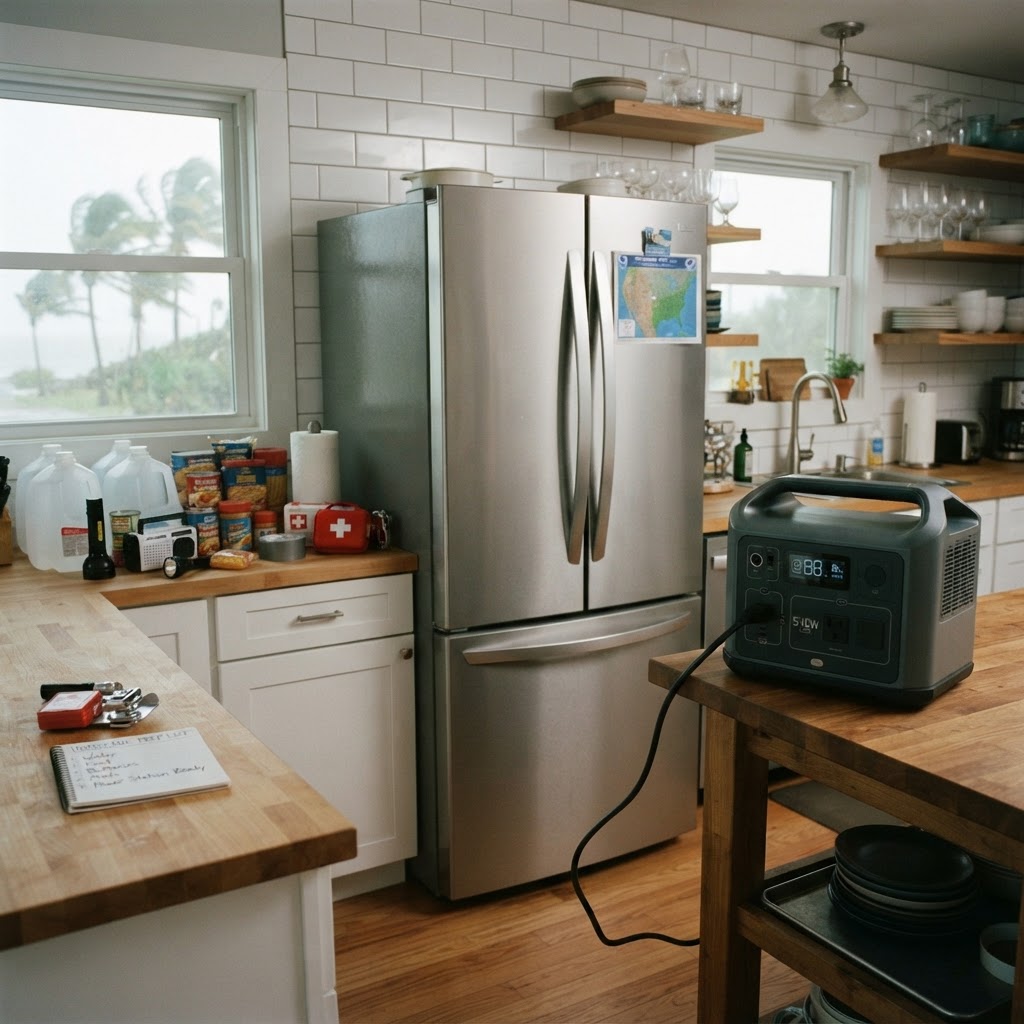
Top Picks This Round
EcoFlow DELTA Pro
The gold standard for home backup, offering a massive 3600Wh capacity and professional-grade build quality to keep food fresh for days.
- +Industry-leading 3600W AC output
- +MultiCharge technology for fastest charging
- +Integrates directly with home panels
Anker SOLIX F3800
A premium, versatile solution that supports dual-voltage (120V/240V) to power large appliances and features an easy-to-roll suitcase design.
- +Direct 240V output for large appliances
- +Durable EV-grade LFP batteries
- +Incredible 6000W surge capacity
Jackery Explorer 2000 Plus
A high-capacity powerhouse featuring ultra-durable LiFePO4 cells and a 3000W output that effortlessly handles full-size refrigerator startup surges.
- +Massive 2kWh capacity expandable to 24kWh
- +Fast 2-hour AC wall charging
- +Ultra-quiet operation in low-power modes
EcoFlow DELTA 2 Max
Combining portability with power, this unit is perfect for RV owners or those needing a mobile backup for a kitchen fridge during shorter outages.
- +Lightest 2kWh LFP station available
- +0-80% charge in just 43 minutes
- +Dead-silent operation under 500W
The short answer: the best solar generator for refrigerator backup for most people is the Jackery Explorer 2000 Plus because it has the right mix of usable capacity, strong 3000W output for compressor startup, and room to expand if hurricane outages in your area tend to drag on. If you want the strongest home-backup option, I’d look at the EcoFlow DELTA Pro, and if you’re trying to spend as little as possible, the BougeRV Fort 1000 is the budget pick.
When I look at a power station for refrigerator during outage use, I care less about marketing terms and more about three simple things: will it start the fridge, how long will it actually keep it cold, and how much hassle is it to recharge when the grid stays down. That matters even more during hurricane season, when you may be dealing with stop-and-go outages, warm kitchens, and no clean window to run out and buy something bigger.
A fridge is a weird load because it doesn’t pull the same wattage all day. A modern fridge cycles on and off, but it also has a startup surge from the compressor. So the best backup power for home fridge use is not always the biggest-looking box on paper. You need enough watt-hours for runtime, enough inverter headroom for startup, and a battery chemistry that makes sense if this unit may sit ready for years between storms.
Every pick here is based on manufacturer specs, official product documentation, and broad patterns in verified customer reviews. This site has not hands-on tested these models, so I’m not going to pretend otherwise. I’m just narrowing the field to the units that make the most sense if your main goal is keeping a fridge running and your food out of the trash.
Quick Comparison
| Product | Best For | Key Spec | value tiers |
|---|---|---|---|
| EcoFlow DELTA Pro | Best for home backup | 3600Wh capacity and 3600W AC output | Premium |
| Anker SOLIX F3800 | Best premium | 240V output and 6000W surge capacity | Premium |
| Jackery Explorer 2000 Plus | Best overall | 2kWh class capacity and 3000W output | Premium |
| EcoFlow DELTA 2 Max | Best for RV / van life | 2kWh class LFP design with very fast charging | Mid-range |
| Bluetti AC200L | Best for job sites | 2400W continuous output and fast AC charging | Mid-range |
| Jackery Explorer 1000 v2 | Best ultra-portable | 1070Wh capacity with compact carry-friendly build | Mid-range |
| BougeRV Fort 1000 | Best budget | Affordable LFP backup for overnight fridge use | Budget |
1. EcoFlow DELTA Pro — Best for home backup
If your fridge is part of a bigger storm plan and not the only thing you want to keep alive, the EcoFlow DELTA Pro makes a lot of sense. Its 3600Wh capacity is the biggest jump on this list for people who want real breathing room, and the 3600W AC output gives you more than enough headroom for a full-size refrigerator plus a few other essentials. For a kitchen setup during hurricane season, that matters because outages rarely stay neat and limited to one appliance.
What pushes it into the home-backup slot for me is that it feels aimed at semi-serious residential use rather than occasional tailgate duty. Compared with the Jackery Explorer 2000 Plus, the DELTA Pro gives you more stored energy out of the box. Compared with the Anker SOLIX F3800, it doesn’t lean as hard into 240V flexibility, but it does offer a strong home-oriented package with direct integration options.
The trade-off is obvious: this thing is heavy. If you need to move a station from a closet to the kitchen every time the power blinks, the DELTA Pro is a bigger commitment than the EcoFlow DELTA 2 Max or Jackery Explorer 1000 v2. And under heavy load, fan noise is part of the deal.
Pros:
- Very strong 3600W AC output with enough headroom for fridge startup and other home loads
- Fast charging options through EcoFlow’s MultiCharge setup
- Can integrate directly with home power systems for a more built-out backup plan
Cons:
- Heavy and bulky compared with more portable stations
- Cooling fans can get loud when it’s working hard
2. Anker SOLIX F3800 — Best premium
The Anker SOLIX F3800 is the pick for the buyer who wants to stop thinking small. For a refrigerator alone, it’s more than most people need, but that’s also the point. This unit is built for households that want one premium station that can handle fridge backup now and larger home loads later. The direct 240V output is unusual in this category and signals that Anker is aiming at more ambitious backup use than a simple kitchen emergency box.
For refrigerator duty, the big story is confidence. A fridge compressor can have an annoying startup surge, especially on older units, and the SOLIX F3800’s 6000W surge capacity gives you a lot of cushion. Compared with the EcoFlow DELTA Pro, this one feels even more like a whole-home-minded platform. Compared with the Jackery Explorer 2000 Plus, it’s less about value balance and more about buying into a top-tier system.
The downside is cost and size. If your only goal is keeping one fridge cold during a storm, this is a lot of station. I’d only step up to it if you know you want premium expandability and heavier-duty backup ambitions beyond the kitchen.
Pros:
- Direct 240V output is rare and useful for bigger home backup plans
- Uses durable EV-grade LFP batteries for long service life
- Huge 6000W surge capacity for hard-start appliances
Cons:
- Premium pricing puts it out of reach for many buyers
- Takes up a lot of floor space in smaller rooms
3. Jackery Explorer 2000 Plus — Best overall
If somebody asks me for the safest all-around recommendation for a solar generator for full size fridge backup, this is the one I’d start with. The Jackery Explorer 2000 Plus hits the sweet spot: enough capacity to matter in a real outage, 3000W output to comfortably handle compressor startup, and the option to expand later if you decide one battery isn’t enough. That balance is why it lands as my best overall pick.
I also like that it doesn’t force you into one narrow use case. The EcoFlow DELTA Pro is stronger for dedicated home backup, and the EcoFlow DELTA 2 Max is easier to move around, but the Jackery sits right in the middle. It’s serious enough for a kitchen fridge, quiet enough for indoor use, and expandable enough that it won’t feel obsolete if your outage planning gets more ambitious after one bad hurricane season.
The main drawback is that it’s still a heavy station, and it carries a higher price per watt than some rivals. But if I’m choosing a unit for dependable refrigerator backup and I want fewer compromises than a 1000Wh class station, this is where I’d put my money first.
Pros:
- Large 2kWh class capacity with expansion potential up to a much bigger system
- Fast wall charging that can top it up in about two hours
- Runs very quietly in lower-power use, which matters indoors during outages
Cons:
- Still heavy at more than 60 pounds
- Costs more per watt than some competing models
4. EcoFlow DELTA 2 Max — Best for RV / van life
The EcoFlow DELTA 2 Max is the one I’d look at if your fridge backup plan needs to move. Maybe you split time between home and RV, maybe you want a station that can live in a van and still cover a kitchen fridge when a storm comes through, or maybe you just don’t want to wrestle a giant battery around the house. That’s where this model earns its spot.
It’s in the same broad capacity class as the Jackery Explorer 2000 Plus, but the vibe is different. The Jackery feels like the more traditional best solar generator for refrigerator choice for home use, while the DELTA 2 Max leans into portability and recharge speed. If you may be topping off from shore power, a campground pedestal, or a short utility window between outages, the fast charging is genuinely useful.
The trade-off is value once you start thinking bigger. Expansion batteries get expensive, and it doesn’t feel as built around heavy home backup as the DELTA Pro. But for short outages, mobile setups, or anyone who wants a quieter under-500W unit in day-to-day use, it’s a smart middle ground.
Pros:
- One of the easier 2kWh LFP stations to move around
- Charges extremely fast, reaching 80% in about 43 minutes
- Very quiet when loads stay under 500W
Cons:
- Expansion batteries add a lot to the total cost
- Not as many high-amperage DC options as some buyers may want
5. Bluetti AC200L — Best for job sites
The Bluetti AC200L is a workhorse-style pick. I wouldn’t call it the prettiest or simplest option here, but if you want something that can bounce between rougher environments and still handle a fridge at home, it makes sense. A 2400W continuous output is more than enough for normal refrigerator duty, and the aggressive AC charging is useful when you get power back and want to refill fast before the next round of outages.
Compared with the Jackery Explorer 2000 Plus, the AC200L looks a bit more value-driven and a bit less plug-and-forget. Compared with the EcoFlow DELTA 2 Max, it feels less mobility-focused and more like a stationary tool chest that happens to power appliances. That can be a good thing if you prioritize output and price-to-performance over polish.
The catch is usability. Bluetti’s app and interface can feel busier than what a beginner wants when the lights are already out. And while 1200W solar input is still useful, it’s not the most aggressive solar ceiling in the group if you’re planning long off-grid recharge windows after a storm.
Pros:
- Very fast AC wall charging with up to 2400W input
- Strong app-based monitoring once you learn the layout
- Competitive value for the output and battery class
Cons:
- Solar input tops out at 1200W
- The interface can feel complicated if you’re new to power stations
6. Jackery Explorer 1000 v2 — Best ultra-portable
The Jackery Explorer 1000 v2 is for the person who knows they need backup, but also knows a 60-plus-pound station is not happening. It’s easy to carry, straightforward to operate, and much less intimidating than the larger units above. For apartment dwellers, older users, or anyone who wants to move a station from room to room without a whole production, that matters more than spec-sheet bragging rights.
Now for the honest part: 1070Wh is not a long-haul fridge battery. It’s better thought of as a short-outage or overnight bridge, especially if you keep the fridge closed and don’t try to pile on extra kitchen loads. Compared with the BougeRV Fort 1000, the Jackery feels more refined and easier to live with. Compared with the Jackery Explorer 2000 Plus, it’s much easier to handle but obviously gives up runtime.
If your outages usually last a few hours and portability is the deciding factor, this is a very reasonable compromise. If you regularly get day-plus hurricane outages, I’d move up to a 2kWh class station fast.
Pros:
- Very easy to move thanks to the compact handle-focused design
- Simple interface that doesn’t ask much from the user in an emergency
- Updated LFP battery with much better cycle life than older versions
Cons:
- 1070Wh capacity is limited for longer blackouts
- Uses an external power brick instead of a built-in AC adapter
7. BougeRV Fort 1000 — Best budget
If you just need the cheapest reasonable answer to fridge backup and you understand the limits of a 1000-class station, the BougeRV Fort 1000 is the budget play. I like that it uses LFP chemistry and keeps the footprint compact, because budget gear often cuts corners in the places that actually matter for emergency use. This one at least starts from the right battery foundation.
Where it fits best is overnight protection or short outages with a standard fridge that doesn’t have a nasty startup demand. Compared with the Jackery Explorer 1000 v2, it gives up some polish and brand confidence but usually comes in as the more affordable option. Compared with the larger 2kWh units, it’s obviously a smaller safety net, but it can still save a fridge full of food if your outages are measured in hours, not days.
The biggest thing to understand is surge headroom. Some refrigerators start easily, some don’t, and older compressors can be picky. So I’d treat this as the value choice for efficient fridges and modest expectations, not the universal answer for every kitchen.
Pros:
- Very affordable entry into LFP backup power
- Durable aluminum-alloy casing feels tougher than the price suggests
- Compact size works well in tight kitchens or apartments
Cons:
- Charging is slower than the top brands in this roundup
- Lower surge capacity may not play nicely with larger compressors
How I Picked These
I picked these the way I’d narrow the field for a friend getting ready for hurricane season. First, I looked at watt-hours because runtime is the whole game with refrigerator backup. A unit can have plenty of output power and still disappoint if the battery is too small to last through the night.
Second, I looked at rated AC output instead of just surge claims. A fridge usually doesn’t need huge running wattage, but compressor startup can trip weaker inverters. I’d rather see solid continuous power with real headroom than a flashy peak number that only lasts a moment.
Third, I favored LiFePO4 batteries where possible because they generally make more sense for standby use and repeated cycling over the long term. I also paid attention to solar input, portability, and value per watt-hour, because a home unit and an RV unit solve different problems even if both can run a fridge.
And to be clear, these picks are based on manufacturer specs, official documentation, and verified customer-review patterns, not hands-on lab testing by this site. That matters, because I’d rather be upfront about the limits than pretend every roundup comes from a warehouse full of gear.
Things to Watch Out For
- Confusing Wh with W. Watt-hours tell you how long a station can run your fridge. Watts tell you whether it can start and power it in the first place. You need both.
- Believing peak power is the same as usable power. Surge or peak output only covers startup for a short moment. Continuous AC output is the number that tells you what the inverter can really sustain.
- Ignoring solar input limits. Two stations can both say “solar generator,” but one may recharge much faster from panels than the other. That matters when clouds, short winter days, or storm debris cut your charging window.
- Assuming one unit can run the whole kitchen. A power station that handles a fridge may not have enough inverter headroom for a microwave, coffee maker, and toaster at the same time. Refrigerator backup and whole-kitchen backup are different targets.
- Taking advertised runtime literally. Real-world runtime depends on fridge size, room temperature, how often the door opens, and inverter losses. The sticker number is never the whole story.
Frequently Asked Questions
What size solar generator do I need for a full-size refrigerator?
The direct answer: a 1000Wh unit can work for short outages, but a 2000Wh class station is the safer target for a full-size fridge. That size gives you better runtime and usually enough inverter headroom for compressor startup.
How long will 2000Wh run a refrigerator?
The direct answer: a 2000Wh power station will often run a refrigerator for roughly 12 to 24 hours. The exact number depends on the fridge’s efficiency, ambient heat, door openings, and inverter losses.
Can a 1000Wh power station start a refrigerator?
The direct answer: yes, some 1000Wh stations can start a refrigerator, but not all of them. Startup surge matters more than battery size here, so older or larger fridges can trip smaller inverters even if the battery itself is full.
Is a solar generator better than a gas generator for fridge backup during hurricane season?
The direct answer: for indoor-safe, quiet fridge backup, yes, a solar generator is often the easier choice. The trade-off is limited runtime unless you buy more capacity or have a good way to recharge from wall power or solar panels.
Can I run a fridge and freezer on one power station?
The direct answer: yes, but only if the station has enough continuous output and enough battery capacity for both loads. For two cold appliances at once, I’d start looking at larger units like the EcoFlow DELTA Pro or Anker SOLIX F3800 instead of a 1000Wh class model.
The Verdict
Best overall: Jackery Explorer 2000 Plus — It balances fridge-friendly output, useful 2kWh-class capacity, quiet operation, and future expansion better than anything else in this roundup.
Best budget: BougeRV Fort 1000 — It’s the low-cost way into LFP refrigerator backup if your outages are usually short and your fridge is not especially demanding.
Premium pick: Anker SOLIX F3800 — If you want a high-end system that goes far beyond basic fridge duty, this is the most ambitious option here.
If you want the simple version, I’d buy the Jackery Explorer 2000 Plus for most homes, step down to the BougeRV Fort 1000 for tighter budgets, or step up to the Anker SOLIX F3800 for a serious whole-home-minded setup. Check today’s prices on Amazon →
Related Guides
- Best 1000Wh Power Stations for Home Backup
- LiFePO4 vs NMC Batteries: Which Lasts Longer for Emergency Power
- How to Size a Solar Generator for an RV Refrigerator
- Best Expandable Power Stations for Multi-Day Outages
All Featured Products
EcoFlow DELTA Pro
The gold standard for home backup, offering a massive 3600Wh capacity and professional-grade build quality to keep food fresh for days.
- +Industry-leading 3600W AC output
- +MultiCharge technology for fastest charging
- +Integrates directly with home panels
Anker SOLIX F3800
A premium, versatile solution that supports dual-voltage (120V/240V) to power large appliances and features an easy-to-roll suitcase design.
- +Direct 240V output for large appliances
- +Durable EV-grade LFP batteries
- +Incredible 6000W surge capacity
Jackery Explorer 2000 Plus
A high-capacity powerhouse featuring ultra-durable LiFePO4 cells and a 3000W output that effortlessly handles full-size refrigerator startup surges.
- +Massive 2kWh capacity expandable to 24kWh
- +Fast 2-hour AC wall charging
- +Ultra-quiet operation in low-power modes
EcoFlow DELTA 2 Max
Combining portability with power, this unit is perfect for RV owners or those needing a mobile backup for a kitchen fridge during shorter outages.
- +Lightest 2kWh LFP station available
- +0-80% charge in just 43 minutes
- +Dead-silent operation under 500W
Bluetti AC200L
A rugged and reliable workhorse that delivers a high 2400W continuous output, making it ideal for maintaining appliances in demanding environments.
- +Fast 2400W AC input charging
- +Excellent app-based monitoring
- +Highly competitive price-to-performance
Jackery Explorer 1000 v2
The updated classic, now with LFP batteries and a more compact frame, perfect for those who prioritize ease of movement and essential backup.
- +Extremely portable handle design
- +Simple, no-nonsense interface
- +Improved 4000-cycle battery life
BougeRV Fort 1000
An entry-level LFP station that provides enough juice to keep a standard fridge running overnight without breaking the bank.
- +Extremely affordable for LFP tech
- +Sturdy aluminum alloy casing
- +Compact footprint for small kitchens
Frequently Asked Questions
What size solar generator do I need for a full-size refrigerator?
A 1000Wh unit can work for short outages, but a 2000Wh class station is the safer target for a full-size fridge because it gives you better runtime and usually enough inverter headroom for compressor startup.
How long will 2000Wh run a refrigerator?
A 2000Wh power station will often run a refrigerator for roughly 12 to 24 hours, depending on the fridge’s efficiency, room temperature, door openings, and inverter losses.
Can a 1000Wh power station start a refrigerator?
Yes, some 1000Wh stations can start a refrigerator, but not all of them. Startup surge matters more than battery size, so older or larger fridges can trip smaller inverters.
Is a solar generator better than a gas generator for fridge backup during hurricane season?
For indoor-safe, quiet fridge backup, yes, a solar generator is often the easier choice. The trade-off is limited runtime unless you have enough capacity or a good way to recharge.
Can I run a fridge and freezer on one power station?
Yes, but only if the station has enough continuous output and enough battery capacity for both loads. For two cold appliances at once, larger models like the EcoFlow DELTA Pro or Anker SOLIX F3800 make more sense than a 1000Wh class unit.