Best Solar Generator for Home Backup & Fridges (2026)
Find the best solar generator for home backup and full-size refrigerators. Keep food cold during the 2026 hurricane season with these power stations.
Affiliate disclosure: As an Amazon Associate I earn from qualifying purchases. We may earn a commission from purchases made through our links, at no extra cost to you.
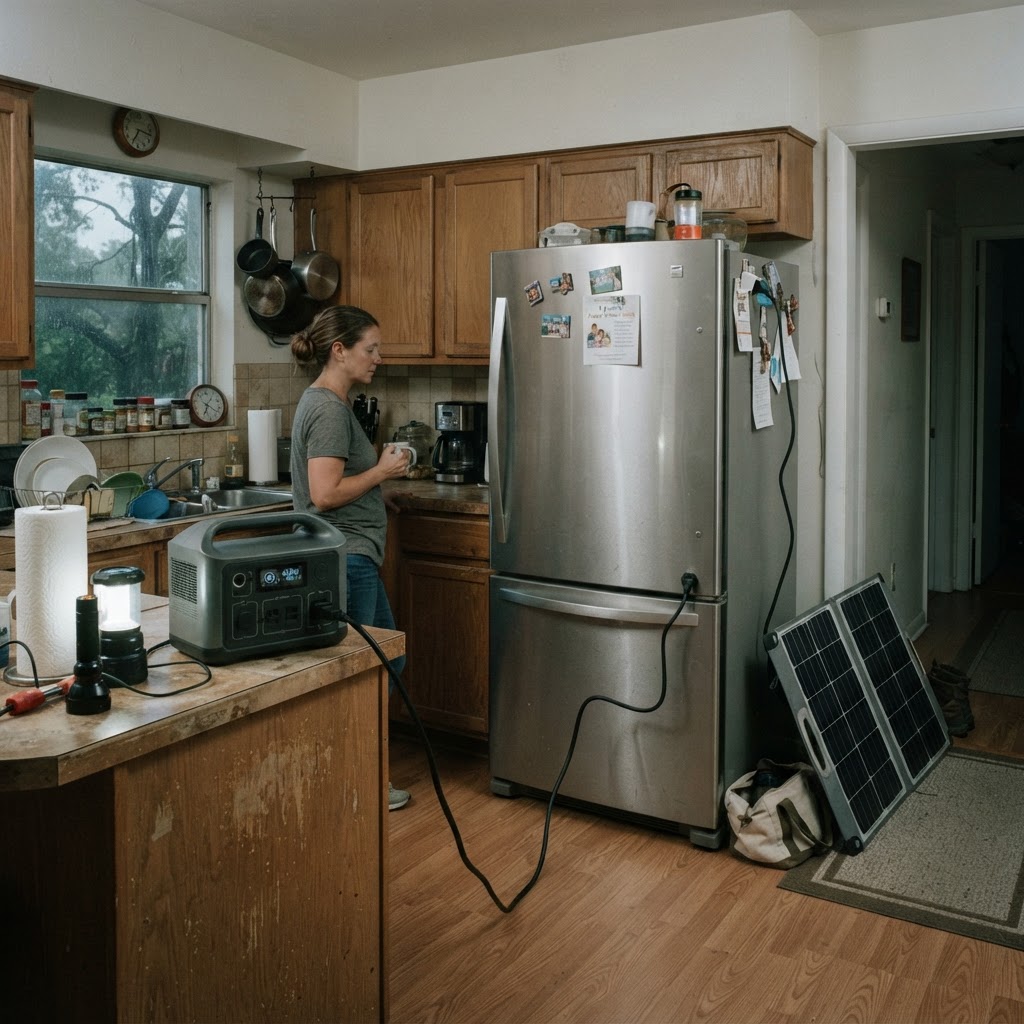
Top Picks This Round
EcoFlow DELTA Pro 3
The gold standard for emergency power, featuring a massive 4000W output and expandable 4kWh capacity to keep full-size fridges and even AC units running for days.
- +Ultra-high 4000W AC output handles startup surges easily
- +Whisper-quiet operation at 30dB for indoor use
- +Fast 2600W solar input for rapid recharge between storms
Anker SOLIX F3800 Portable Power Station
A high-voltage powerhouse that can power 120V and 240V appliances, making it the ultimate solution for full-size fridges and well pumps.
- +Direct 240V output for heavy-duty appliances
- +Easily expandable up to 26.9kWh with extra batteries
- +Industrial-grade wheels and handle for mobility
Jackery Solar Generator 3000 Pro
Renowned for its user-friendly interface and rapid 2.4-hour solar charging, this unit is built for reliability during extended grid failures.
- +Fastest solar charging in its class with 6 panels
- +Smart app control for monitoring energy consumption
- +Operates efficiently in temperatures as low as -4°F
Jackery Explorer 2000 Plus
Jackery's first LFP powerhouse, designed to be expandable and rugged enough for both hurricane prep and off-grid living.
- +Expandable capacity up to 12kWh with add-on batteries
- +LFP cells rated for 10+ years of regular use
- +Quiet 'sink' cooling technology
The short answer: for most people trying to keep a full-size refrigerator running through outages, the EcoFlow DELTA Pro 3 is the safest all-around bet because it combines a big 4kWh battery, a very strong 4000W inverter, and fast solar recharging. If you're also searching for the best solar generator for home backup/CPAP/job sites, it’s the kind of unit that has enough headroom to do more than just a fridge.
When I look at a solar generator for refrigerator duty, I care less about flashy marketing and more about three boring things that matter in a blackout: whether it can handle the compressor startup surge, how many watt-hours you really get, and how quickly you can refill it when the sun comes back out. A full-size fridge usually doesn’t draw huge power all day, but it does cycle on and off, and that startup hit is what trips up undersized stations.
For hurricane season, I also think differently than I would for camping. At home, weight matters less than runtime, expandability, and how easy the unit is to live with indoors for a couple of rough days. This list is based on manufacturer specs, official product documentation, and consistent patterns in verified customer reviews—not hands-on testing by this site—so I’m focusing on the stuff you can compare directly and usefully.
Quick Comparison
| Product | Best For | Key Spec | value tiers |
|---|---|---|---|
| EcoFlow DELTA Pro 3 | Best overall | 4000W output, 4kWh capacity | Premium |
| Anker SOLIX F3800 Portable Power Station | Best for home backup | 240V output, expandable to 26.9kWh | Premium |
| Jackery Solar Generator 3000 Pro | Best premium | Fast solar charging, large-capacity backup | Premium |
| Jackery Explorer 2000 Plus | Best for RV / van life | Expandable to 12kWh, LFP battery | Premium |
| EcoFlow DELTA 2 Max | Best for fast charging | 2048Wh capacity, rapid AC + solar charging | Mid-range |
| Bluetti AC200L Portable Power Station | Best mid-range | 2400W output, 2048Wh capacity | Mid-range |
| Pecron E2000LFP Portable Power Station | Best budget | 2000Wh class capacity, up to 1200W solar input | Budget |
1. EcoFlow DELTA Pro 3 — Best overall
If I were helping someone buy one unit for serious refrigerator backup during hurricane season, this is where I’d start. The EcoFlow DELTA Pro 3 brings the two things a full-size fridge likes most: lots of inverter headroom and enough battery to avoid constantly watching the percentage drop. Its 4000W AC output is far more than a refrigerator needs once running, but that extra muscle is exactly what makes startup surges a non-issue.
What really separates it from smaller 2kWh-class units like the EcoFlow DELTA 2 Max or Bluetti AC200L is breathing room. Those are good stations, but the DELTA Pro 3 gives you a much better shot at running the fridge, some lights, a router, and maybe a few other essentials without feeling tapped out by the first night. Compared with the Anker SOLIX F3800, the EcoFlow feels more like the best balance play: still huge, still powerful, but a little more straightforward if your main goal is keeping food cold and handling common home essentials.
The downsides are exactly what you’d expect. It’s heavy, expensive, and not something you casually move from room to room. But if your idea of emergency power for full size fridge means you want the least compromise and the best chance of riding out a multi-day outage well, this is the strongest overall pick here.
Pros:
- Very high 4000W AC output easily handles refrigerator startup surges.
- Runs quietly at around 30dB, which matters a lot if it’s sitting inside during a storm.
- Fast 2600W solar input helps you recharge quickly between bad weather windows.
Cons:
- It’s extremely heavy at over 110 pounds.
- The price sits firmly in premium territory compared with older or smaller models.
2. Anker SOLIX F3800 Portable Power Station — Best for home backup
The Anker SOLIX F3800 is the one I’d look at if your refrigerator is only part of the plan. This unit earns its “best for home backup” label because it goes beyond normal portable power station duty and starts acting more like a serious home power hub. The big headline is direct 240V output, which matters if you’re thinking about larger home loads in addition to the fridge.
For a refrigerator alone, the F3800 is honestly more machine than most people need. But for a house in hurricane country—especially one with a well pump, larger appliances, or a bigger backup plan—it makes a lot of sense. Compared with the EcoFlow DELTA Pro 3, I’d lean Anker if your priority is a broader home-backup system. Compared with the Jackery Solar Generator 3000 Pro, it’s less about portability and simplicity and more about scale.
The trade-off is that it takes up space and often needs panels bought separately, depending on the kit. This isn’t the one I’d pick for somebody who just wants a compact battery next to the kitchen wall. It’s for the person who wants to build around one serious unit and expand later.
Pros:
- Direct 240V output gives it more flexibility for heavy-duty home appliances.
- Expandable up to 26.9kWh, which is a huge advantage for longer outages.
- Built-in wheels and handle make a heavy unit more manageable to move.
Cons:
- Solar panels are commonly sold separately in many package options.
- Its large footprint means you need real storage space for it.
3. Jackery Solar Generator 3000 Pro — Best premium
Jackery’s 3000 Pro lands in a spot I’d call premium for people who want a polished, easy-to-use backup setup without stepping all the way into the heavier whole-home category. It has enough battery and enough inverter strength to be a solid solar generator for refrigerator duty, and Jackery’s interface tends to be approachable for people who don’t want to decode a complicated power menu during a storm.
One of its biggest selling points is charging speed, especially with a full solar array. That matters more than a lot of buyers realize. In hurricane season, you may only get a decent charging window for part of the day, and a unit that can refill quickly gives you more resilience. Compared with the Explorer 2000 Plus, the 3000 Pro feels more like a ready-to-go premium appliance. Compared with the EcoFlow DELTA Pro 3, it’s still premium, but it gives up some brute-force output and some long-term battery chemistry advantages.
The main compromise is its NMC battery chemistry rather than LFP. That doesn’t make it bad, but if you expect years of regular cycling or want the most cycle-friendly chemistry, units like the Jackery Explorer 2000 Plus, EcoFlow DELTA 2 Max, or Bluetti AC200L are more appealing on that front.
Pros:
- Very fast solar charging when paired with a full six-panel setup.
- App control makes it easier to track usage and remaining runtime.
- Designed to operate in very cold conditions, down to -4°F.
Cons:
- Uses Lithium-ion NMC rather than LiFePO4.
- Has fewer battery expansion paths than some major rivals.
4. Jackery Explorer 2000 Plus — Best for RV / van life
The Explorer 2000 Plus is the one I’d point RV and van folks toward first, especially if the same unit needs to pull double duty for hurricane prep at home. It starts with a manageable 2kWh-class platform but can expand much further, which is exactly how a lot of mobile users like to build: start with one battery, learn your loads, then add capacity if the lifestyle sticks.
Its LFP chemistry is a big plus over the Jackery Solar Generator 3000 Pro if longevity matters to you. It’s also quieter in use than some competitors, which I appreciate in a small living space. Compared with the EcoFlow DELTA 2 Max, the Jackery gives you a clearer expansion path for longer off-grid stretches. Compared with the Bluetti AC200L, it trades some mid-range value for a setup that feels more purpose-built for mobile living.
For a full-size home refrigerator, a single unit can absolutely help, but the base capacity is still something I’d think of as “good for shorter outages” unless you recharge with solar or add expansion batteries. If you want one station to move between a rig and your house, though, it makes a strong case.
Pros:
- Expandable up to 12kWh with extra batteries for much longer runtime.
- LFP cells are rated for long service life, roughly 10 years of regular use.
- Quiet cooling design is easier to live with in an RV or van.
Cons:
- Its price per watt-hour is higher than some value-focused rivals.
- The main unit is still fairly heavy without adding the optional cart.
5. EcoFlow DELTA 2 Max — Best for fast charging
If your outages are frequent but not always multi-day disasters, the EcoFlow DELTA 2 Max hits a sweet spot. I like it for people who want a capable fridge backup unit that one person can actually carry without a major wrestling match. At about 50 pounds, it’s much easier to position than the giant class above it, and the charging speed is a real advantage when you’re topping up fast before the next round of weather.
Its base capacity is 2048Wh, so this is not the same animal as the DELTA Pro 3. That’s important. For a full-size refrigerator, it can be enough for a decent stretch, especially if you’re disciplined about not piling on extra loads, but I wouldn’t pretend it offers the same buffer as a 3kWh or 4kWh unit. Compared with the Bluetti AC200L, the EcoFlow wins on charging speed and portability. Compared with the Pecron E2000LFP, it costs more but feels more polished and easier to integrate into a broader backup routine.
This is one of the better choices for people who value quick turnaround, apartment-friendly handling, and occasional expansion over maximum raw capacity from day one.
Pros:
- Extremely fast AC plus solar charging is one of its biggest strengths.
- At around 50 pounds, it’s light enough for many people to carry solo.
- Strong 5-year warranty adds some peace of mind.
Cons:
- The 2048Wh base pack may need expansion for a full 48 hours of fridge backup.
- Some performance settings are tucked into the app rather than the front panel.
6. Bluetti AC200L Portable Power Station — Best mid-range
The Bluetti AC200L is the kind of station I recommend when someone wants meaningful refrigerator backup without jumping straight to premium pricing. In the mid-range class, 2400W of continuous output is stout, and the 3600W surge capability should comfortably cover the startup needs of most full-size fridges. For many households, that’s the practical sweet spot.
I also like the 20ms UPS mode on paper for keeping fridge power steady during short interruptions. Compared with the EcoFlow DELTA 2 Max, the Bluetti feels a little more like a home-backup tool and a little less like a fast-charge portable. Compared with the Pecron E2000LFP, it costs more, but you get a more feature-rich setup and stronger inverter performance.
The trade-offs are pretty normal at this level. The fan can get loud under load, and Bluetti’s cable ecosystem can be annoying if you want maximum flexibility with solar panels. Still, for buyers who want a solid middle ground between budget and premium, it makes a very sensible hurricane-season fridge pick.
Pros:
- 2400W AC output with 3600W surge is enough for most fridge startup loads.
- 20ms UPS mode is helpful for maintaining constant refrigerator power.
- Pricing is competitive for the output and capacity you’re getting.
Cons:
- The internal fan can be noticeably loud when the unit is working hard.
- Some solar setups require proprietary cables, which is a hassle.
7. Pecron E2000LFP Portable Power Station — Best budget
If your goal is simple—keep the fridge cold without spending premium money—the Pecron E2000LFP is the budget play that makes the most sense. A lot of cheaper stations look attractive until you notice they cut corners on battery chemistry, output, or solar input. This one still gives you 2000Wh-class capacity, LiFePO4 cells, and up to 1200W of solar charging, which is why it stands out.
Compared with the Bluetti AC200L or EcoFlow DELTA 2 Max, the Pecron is less refined. The display is basic, the charging brick is clunky, and you won’t get the same app experience or polished ecosystem. But compared with many low-cost alternatives, it puts the money in the places that actually matter for outages: usable battery capacity and decent recharge potential.
For a refrigerator-only emergency setup, especially if you can add solar or just need to bridge overnight outages, this is the value buy. I wouldn’t expect the same convenience or fit-and-finish as the bigger brands, but if budget is driving the decision, this is the one I’d keep on the shortlist.
Pros:
- Outstanding overall value value for a 2000Wh LFP station.
- LiFePO4 battery is built for long life, with 3500-plus cycle claims.
- Supports up to 1200W solar input, which is strong for the price class.
Cons:
- The external AC charging brick is bulky and not very elegant.
- The LCD is basic and lacks the deeper controls found on pricier models.
How I Picked These
I picked these the way I’d narrow the field for a friend before hurricane season: by looking at the specs that actually affect whether a refrigerator keeps running when the grid drops. That starts with battery capacity in watt-hours, but it also means checking the inverter rating in watts, because a fridge can have a modest running draw and still need a decent surge to start the compressor.
I also gave extra weight to LiFePO4 chemistry, since it usually makes more sense for backup gear that may cycle often over several years. Solar input mattered a lot too. A big battery is nice, but if it takes forever to refill after one cloudy day, that advantage disappears fast. Finally, I looked at portability, expandability, and value per watt-hour, because a unit that is technically powerful but impossible to move or impossible to grow can be the wrong fit for real life.
To be clear, this site has not hands-on tested these models. These recommendations are based on manufacturer specifications, official documentation, and verified customer-review patterns that help show where each model tends to fit best.
Things to Watch Out For
- Confusing Wh with W. Watt-hours tell you how long a station may run your fridge. Watts tell you whether it can start and power it at all. You need both.
- Believing peak output is the whole story. A flashy surge number looks nice, but continuous AC output is what matters once the appliance is running and you add other loads.
- Ignoring solar input limits. Two power stations with similar battery size can recharge at very different speeds. For hurricane season, fast solar input can matter almost as much as capacity.
- Forgetting the inverter ceiling for extra appliances. A fridge may run fine, but adding a microwave, coffee maker, or power tools at the same time can push smaller units over the edge.
- Expecting advertised runtime to match real life. Door openings, room temperature, inverter losses, and what else you plug in all reduce runtime. Real-world fridge backup is always less tidy than the brochure.
Frequently Asked Questions
Can a solar generator run a full-size refrigerator?
Yes, a solar generator can run a full-size refrigerator if it has enough continuous AC output and enough surge capacity to start the compressor. In practice, I’d look for solid inverter headroom and at least around 2kWh if the fridge is your main priority.
How long will a 2000Wh power station run a fridge?
A 2000Wh power station will often run a fridge for roughly 12 to 24 hours, depending on the refrigerator’s efficiency, room temperature, and how often the door opens. Real runtime varies a lot because the compressor cycles on and off rather than pulling the same wattage all day.
What size solar generator do I need for emergency power for full size fridge?
For emergency power for full size fridge use, I think 2000Wh is the practical minimum and 3000Wh to 4000Wh is more comfortable for longer outages. If you want to run lights, internet, or a freezer too, size up fast.
Is LiFePO4 better than NMC for hurricane-season backup?
Yes, LiFePO4 is usually the better fit for hurricane-season backup if long cycle life and durability matter most. NMC can still work well, but LFP tends to age better for repeated use over the years.
What is the best solar generator for hurricane season 2026?
The best solar generator for hurricane season 2026 in this group is the EcoFlow DELTA Pro 3 for most households. It gives you the strongest mix of battery capacity, inverter power, indoor-friendly noise level, and fast solar recharge.
The Verdict
Best overall: EcoFlow DELTA Pro 3. It’s the most complete refrigerator-backup package here, with the inverter strength and battery size to handle real outages with less compromise.
Best budget: Pecron E2000LFP Portable Power Station. It gives you honest 2000Wh-class LFP capacity and good solar potential without pushing you into premium pricing.
Best premium: Jackery Solar Generator 3000 Pro. It’s a polished, fast-charging premium option for people who want a user-friendly big-capacity setup and don’t mind the NMC trade-off.
If you want the shortest path to a confident buy, I’d start with the EcoFlow DELTA Pro 3, drop to the Bluetti AC200L or Pecron E2000LFP if budget matters more, and step up to the Anker SOLIX F3800 if your refrigerator is just one piece of a larger home-backup plan. Check today’s prices on Amazon →
Related Guides
- Best 1000Wh Power Stations for Apartment Backup
- LiFePO4 vs NMC Batteries: Which Lasts Longer in a Power Station?
- How to Size a Solar Generator for an RV Refrigerator and Small AC Loads
- Best Expandable Power Stations for Multi-Day Home Backup
All Featured Products
EcoFlow DELTA Pro 3
The gold standard for emergency power, featuring a massive 4000W output and expandable 4kWh capacity to keep full-size fridges and even AC units running for days.
- +Ultra-high 4000W AC output handles startup surges easily
- +Whisper-quiet operation at 30dB for indoor use
- +Fast 2600W solar input for rapid recharge between storms
Anker SOLIX F3800 Portable Power Station
A high-voltage powerhouse that can power 120V and 240V appliances, making it the ultimate solution for full-size fridges and well pumps.
- +Direct 240V output for heavy-duty appliances
- +Easily expandable up to 26.9kWh with extra batteries
- +Industrial-grade wheels and handle for mobility
Jackery Solar Generator 3000 Pro
Renowned for its user-friendly interface and rapid 2.4-hour solar charging, this unit is built for reliability during extended grid failures.
- +Fastest solar charging in its class with 6 panels
- +Smart app control for monitoring energy consumption
- +Operates efficiently in temperatures as low as -4°F
Jackery Explorer 2000 Plus
Jackery's first LFP powerhouse, designed to be expandable and rugged enough for both hurricane prep and off-grid living.
- +Expandable capacity up to 12kWh with add-on batteries
- +LFP cells rated for 10+ years of regular use
- +Quiet 'sink' cooling technology
EcoFlow DELTA 2 Max
A lightweight but powerful LFP station that charges from 0-80% in just 43 minutes, perfect for quick replenishment between storms.
- +Fastest AC+Solar dual charging in the industry
- +Light enough (50 lbs) for one person to carry
- +Industry-leading 5-year warranty
Bluetti AC200L Portable Power Station
The upgraded successor to the legendary AC200P, offering 2400W of continuous power and 2048Wh capacity in a highly efficient package.
- +2400W AC output handles 3600W surges
- +Seamless 20ms UPS mode for constant fridge power
- +Highly competitive mid-range pricing
Pecron E2000LFP Portable Power Station
The most cost-effective way to get 2000Wh of LFP capacity, ensuring your refrigerator stays cold without breaking the bank.
- +Exceptional overall value ratio
- +Durable LiFePO4 battery with 3500+ cycles
- +Supports up to 1200W solar charging
Frequently Asked Questions
Can a solar generator run a full-size refrigerator?
Yes. It needs enough continuous AC output plus enough surge capacity to start the compressor, and around 2kWh or more is a practical starting point for useful fridge backup.
How long will a 2000Wh power station run a fridge?
Usually about 12 to 24 hours, depending on the refrigerator, ambient temperature, door openings, and inverter losses. Real runtime varies because fridges cycle on and off.
What size solar generator do I need for emergency power for full size fridge?
About 2000Wh is the practical minimum, while 3000Wh to 4000Wh is more comfortable for longer outages. Go bigger if you also want to run lights, internet gear, or other appliances.
Is LiFePO4 better than NMC for hurricane-season backup?
Yes, in most cases. LiFePO4 usually offers better cycle life and long-term durability, which makes it a better fit for repeat outage use over the years.
What is the best solar generator for hurricane season 2026?
For most households, the EcoFlow DELTA Pro 3 is the best overall choice in this group. It balances strong battery capacity, high inverter output, quiet indoor operation, and fast solar recharge.