Best Portable Power Station for Starlink Mini: 2026 Guide
Compare the best portable power station for Starlink Mini. Find top-rated EcoFlow, Bluetti, and Anker models for off-grid travel and runtime estimates.
Affiliate disclosure: As an Amazon Associate I earn from qualifying purchases. We may earn a commission from purchases made through our links, at no extra cost to you.
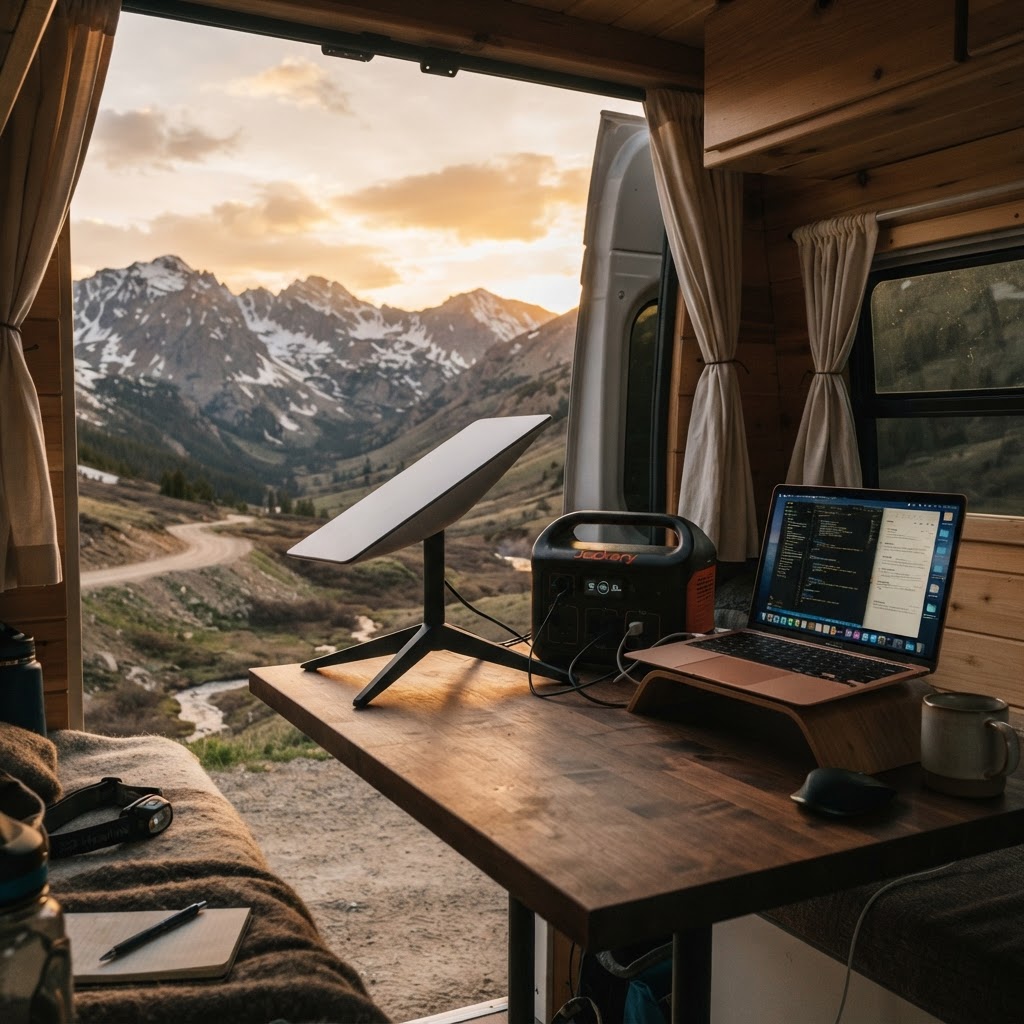
Top Picks This Round
EcoFlow River 2 Pro
For users who need to keep the Starlink Mini running for 24+ hours straight, the River 2 Pro offers high capacity while remaining light enough for one-handed carry.
- +768Wh capacity for long-term off-grid use
- +800W AC output handles small appliances too
- +Extremely fast 70-minute full recharge
Bluetti AC60
The ultimate choice for overlanders and beach travelers, featuring an IP65 water and dust resistance rating to protect your power source from the elements.
- +IP65 rated for rain and dust protection
- +Expandable capacity with B80 batteries
- +Whisper-quiet operation
Goal Zero Yeti 500 (6th Gen)
Known for their premium build and tier-1 support, the Yeti 500 provides a refined user interface and high-quality internal components for the discerning traveler.
- +Clean, easy-to-read informative display
- +Excellent customer support and longevity
- +Multiple high-speed USB-C PD ports
Jackery Explorer 300 Plus
The most rugged and portable option in the 300Wh class, featuring a tablet-sized form factor and superior impact resistance for backcountry travel.
- +Extremely durable build quality
- +Very slim profile fits in backpacks
- +Industry-leading 5-year warranty
The short answer: for most travelers, the best portable power station for Starlink Mini is the EcoFlow River 3 because it keeps the setup small, recharges very quickly, and makes more sense for the Mini’s modest power needs than hauling a much bigger battery. If you need to stay online for much longer stretches between charges, the EcoFlow River 2 Pro is the better step-up.
I like Starlink Mini best when the power side stays simple. The dish is portable enough that it doesn’t need a huge home-backup-sized battery for most trips, but it does need a power station that’s efficient, easy to recharge, and not annoying to carry around every day. If you’re trying to figure out how to power Starlink Mini off-grid, the big mistake is buying by inverter hype instead of battery capacity, port layout, and recharge speed.
For this 2026 travel guide, I’m not claiming hands-on testing. These picks are based on manufacturer specs, official product documentation, retailer listings, and consistent owner-feedback patterns where they line up with the published numbers. Seriously Suggested may earn a commission when you purchase through links on this page. This does not affect the price you pay or how products are ranked.
Decision: Recommended for a specific use case.
Quick Comparison
| Product | Best For | Key Spec | value tiers |
|---|---|---|---|
| EcoFlow River 2 Pro | Long-term off-grid use | 768Wh capacity | Mid-range |
| Bluetti AC60 | Harsh environments | IP65 rain and dust protection | Premium |
| Goal Zero Yeti 500 (6th Gen) | Premium buyers | Multiple high-speed USB-C PD ports | Premium |
| Jackery Explorer 300 Plus | Ultra-portable travel | Slim 300Wh-class form factor | Mid-range |
| EcoFlow River 3 | Overall value | 0-100% recharge in about 1 hour | Budget |
| Bluetti EB3A | Budget shoppers | 600W inverter | Budget |
| Anker SOLIX C300 DC | Digital nomads | Dual 140W USB-C ports, DC-only | Budget |
1. EcoFlow River 2 Pro — Best for long-term off-grid
The EcoFlow River 2 Pro is the one I’d point to if your Starlink Mini setup needs to stay online for a long time without babying the battery. Its listed 768Wh capacity is the biggest advantage here. For a low-draw internet setup, that extra capacity matters more than chasing oversized inverter numbers, because it gives you real buffer for workdays, overnight use, or cloudy weather when charging is inconsistent.
This is the better pick than the EcoFlow River 3 if your normal routine involves parking for a day or two and staying connected the whole time. It also makes more sense than the Jackery Explorer 300 Plus or Anker SOLIX C300 DC if you want to run your Mini plus a laptop, lights, and a few other small devices without constantly watching the battery percentage.
The trade-off is simple: you pay for the longer runtime with more weight and more bulk. Based on the listed specs, this is still portable, but it is not the one I’d throw in a backpack for a quick coffee-shop session or a short hike to a remote overlook.
Pros:
- Large 768Wh battery is a strong fit for longer off-grid stretches
- 800W AC output gives you room for other small appliances too
- Very fast full recharge, with the manufacturer listing about 70 minutes
Cons:
- At 17.2 pounds, it’s noticeably heavier than the more travel-focused options
- The larger footprint takes up more room in a van, SUV, or camp bin
2. Bluetti AC60 — Best for harsh environments
The Bluetti AC60 earns its spot because it solves a problem most compact power stations ignore: weather. If you travel in blowing dust, wet campgrounds, beach sand, or open truck beds, the IP65 rating is a real differentiator based on the manufacturer’s listed specs. That makes it much easier to recommend for overlanders and rougher travel than the EcoFlow River 3 or Jackery Explorer 300 Plus, which are more typical indoor-or-dry-weather portable units.
I also like that Bluetti gives you an expansion path with B80 batteries. That’s useful if you want to start compact and later add more stored energy for longer Starlink sessions. Compared with the River 2 Pro, the AC60 gives up a lot of built-in capacity, but it answers back with durability and weather resistance.
The downside is that it’s heavy for a 403Wh-class station and priced like a specialty product. If your power station will spend most of its life inside a van or in fair weather, the extra cost and weight may not be worth it.
Pros:
- IP65 rating adds real rain and dust protection
- Expandable with B80 batteries if your needs grow later
- Quiet operation is a nice fit for campsites and enclosed spaces
Cons:
- Heavier than I’d like for its listed 403Wh capacity
- You’re paying a premium mainly for the weatherproof design
3. Goal Zero Yeti 500 (6th Gen) — Best premium
The Goal Zero Yeti 500 (6th Gen) is the premium pick for buyers who care less about squeezing every dollar per watt-hour and more about interface quality, polish, and support. Goal Zero’s appeal has always been the more refined ownership experience, and this model looks aimed at that same person: someone who wants a clean display, straightforward controls, and a brand with a long reputation in portable power.
For Starlink Mini travel, the multiple high-speed USB-C PD ports are a practical advantage. If your work kit is centered around USB-C devices, this can feel cleaner than relying on AC adapters. Compared with the EcoFlow River 3, you’re trading away some of that ultra-fast recharge appeal for a more premium-feeling ecosystem. Compared with the Anker SOLIX C300 DC, you get a more traditional all-around station instead of a DC-only specialist.
The main reason it isn’t my top overall pick is value. In this value tiers, I want either clearly better runtime, clearly faster charging, or a feature like weatherproofing. The Yeti 500 mostly wins on fit and finish, not raw numbers.
Pros:
- The display is clean, informative, and easy to understand at a glance
- Strong reputation for customer support and long-term ownership confidence
- Multiple fast USB-C PD ports fit modern travel and work gear well
Cons:
- It doesn’t match the ultra-fast AC charging pace of rivals like EcoFlow
- No built-in LED flashlight if you want that campsite convenience feature
4. Jackery Explorer 300 Plus — Best ultra-portable
If your first priority is carrying convenience, the Jackery Explorer 300 Plus stands out. The slim profile matters more than it sounds on paper. A lot of small stations are technically portable but still boxy enough to be annoying in a backpack, under a seat, or in a crowded van drawer. This one is better suited to people who are moving often and want a unit that feels compact every single time they grab it.
I’d choose it over the River 2 Pro for mobility, and over the Bluetti AC60 when weatherproofing isn’t necessary and you just want the easiest packable option. It also makes more sense than the Goal Zero Yeti 500 if you’re not trying to build a premium desk-like power setup on the road.
The trade-off is cost per watt-hour. You’re paying extra for portability and durability, not maximum battery for the money. If raw value is the goal, the Bluetti EB3A usually makes the stronger argument, and if direct USB-C efficiency matters more than flexibility, the Anker SOLIX C300 DC is worth a hard look.
Pros:
- Very durable build with a travel-friendly feel
- Thin, compact shape is easier to stash than many small power stations
- The 5-year warranty is a standout reassurance point
Cons:
- You pay more per watt-hour than with stronger value picks
- AC recharging is slower than what EcoFlow currently offers
5. EcoFlow River 3 — Best overall
The EcoFlow River 3 is the one I’d recommend to the biggest number of Starlink Mini owners. The reason is simple: it fits the job. Starlink Mini travel is usually about powering internet gear, topping up a laptop or phone, and recharging fast whenever you get access to shore power. The River 3’s tiny footprint and 1-hour recharge are exactly the kind of features that make life easier on the road.
If you’ve been looking up EcoFlow River 3 Starlink Mini runtime, the honest answer is that runtime always depends on your average draw and how you power the dish. I would treat any runtime number as an estimate, not a promise. What I can say from the listed design and feature set is that the River 3 sits in the sweet spot for compact connectivity kits: smaller and easier to live with than the River 2 Pro, more polished than the EB3A, and more versatile than the DC-only Anker SOLIX C300 DC.
Who should skip it? People who need all-day-plus runtime without recharging, and people who are very sensitive to fan noise. The internal fan can be a little high-pitched, and the app account requirement will annoy some buyers who prefer simpler hardware.
Pros:
- Very fast charging with EcoFlow’s X-Stream system, listed at about 1 hour to full
- Compact GaN-based design keeps the footprint especially small
- Silent mode is useful for stealth camping and quiet workspaces
Cons:
- The internal fan can sound a bit sharp to noise-sensitive users
- Full app functionality requires creating an account
6. Bluetti EB3A — Best budget
The Bluetti EB3A is the budget pick because it gets you into a real portable power station without spending much. For a Starlink Mini owner who mainly wants affordable off-grid internet for occasional trips, this is the kind of value that’s hard to ignore. It keeps the entry price low while still giving you a LiFePO4 battery and a 600W inverter based on the listed specs.
This is the one I’d compare directly against the EcoFlow River 3. The River 3 is the nicer overall package, especially if fast recharging is high on your list, but the EB3A is often the easier buy for someone who wants usable capacity and decent flexibility without stretching the budget. Compared with the Jackery Explorer 300 Plus, the EB3A usually wins on value per watt-hour.
Its weaknesses are the kind you notice in day-to-day use rather than on a spec card. Firmware updates have a mixed reputation, and the slightly higher idle draw means it’s not the most efficient choice for squeezing every last bit of runtime out of a small battery.
Pros:
- Affordable entry point for a genuine power-station setup
- LiFePO4 battery is rated for long cycle life
- Wireless phone charging pad is a handy extra
Cons:
- Firmware updating can be finicky
- Idle power draw is a little higher than some close competitors
7. Anker SOLIX C300 DC — Best for digital nomads
The Anker SOLIX C300 DC is a very specific tool, and that’s why I like it so much for the right buyer. If your travel setup is basically Starlink Mini, a laptop, a phone, and maybe a camera battery, a DC-first station makes a lot of sense. You avoid some of the waste that comes with AC conversion, and the dual 140W USB-C ports are a serious advantage for modern work gear.
If someone asks me for the best small power station for digital nomads, this is the first one I’d bring up. It also comes up when people search for a Starlink Mini USB-C power bank. Strictly speaking, this is a compact DC power station, not a simple power bank, but it scratches the same itch: small, direct, efficient power for USB-C-heavy travel.
The catch is obvious and important: no AC outlets. That makes it less flexible than the EcoFlow River 3, Bluetti EB3A, or Jackery Explorer 300 Plus. If you ever need traditional AC output, skip this one and buy a more general-purpose station instead.
Pros:
- Direct DC output helps reduce wasted power
- Compact vertical shape and carrying strap work well for constant travel
- Dual 140W USB-C ports are strong for laptop-and-internet workflows
Cons:
- No AC outlets at all on this DC-only model
- Smaller capacity is better for day use than for multi-day stays
How I Picked These
I picked these the way I’d actually shop for a Starlink Mini trip: by starting with battery capacity, then backing into size, ports, and charging speed. For this use case, watt-hours matter more than flashy surge numbers because your dish and small electronics need steady energy over time, not a giant startup burst.
I also looked at portability in the real-world sense. A compact station you’ll actually carry is more useful than a bigger one you leave behind. On top of that, I paid attention to battery chemistry when it was clearly listed, value per watt-hour, and recharge speed from wall power, because fast top-ups are a big deal when you’re bouncing between campsites, cafes, vans, and short overnight stops.
Finally, I looked for product fit. A weather-resistant unit like the Bluetti AC60 solves a different problem than a DC-first nomad unit like the Anker SOLIX C300 DC. There is no universal best here, only the best match for how you travel.
Things to Watch Out For
- Confusing Wh with W: Watt-hours tell you roughly how long the battery can run your gear. Watts tell you how much power the station can deliver at once. For Starlink Mini, capacity is usually the more important number.
- Believing peak output matters more than continuous output: Marketing often pushes peak or surge numbers, but your real concern is the continuous output and whether your whole setup stays under it.
- Ignoring solar input limits: If you plan to recharge from portable solar panels, check the station’s accepted solar input carefully. A panel can be physically compatible and still be a poor charging match.
- Assuming advertised runtime is guaranteed: Runtime is always an estimate. Inverter losses, USB-C versus AC use, ambient temperature, battery reserve, and what else you charge all change the result.
- Buying too much inverter and too little battery: A huge inverter sounds impressive, but if the battery is small, it won’t keep Starlink Mini online for long. For travel internet, usable stored energy usually beats oversized AC bragging rights.
Frequently Asked Questions
What size portable power station do I need for Starlink Mini?
The direct answer: most people should start in the roughly 200Wh to 400Wh class for travel use. Go larger if you want overnight or all-day runtime without recharging, or if you’ll also be powering a laptop, lights, and other gear.
How long will Starlink Mini run on a portable power station?
The direct answer: runtime is an estimate, not a fixed number. A simple way to estimate is usable battery capacity divided by your average watt draw, while allowing for conversion losses and a small reserve.
Can I power Starlink Mini from USB-C?
The direct answer: in some setups, yes, but it depends on the station’s USB-C output and the exact cable or adapter arrangement you’re using. That’s why DC-focused models like the Anker SOLIX C300 DC can be especially appealing for USB-C-heavy travel kits.
Is the EcoFlow River 3 enough for Starlink Mini?
The direct answer: yes, for many travelers it is enough, which is why it’s my top overall pick. It makes the most sense when you value compact size and fast recharging more than maximum multi-day runtime.
Is solar worth adding for a Starlink Mini travel setup?
The direct answer: yes, if you regularly stay off-grid for more than a day. Solar matters less for quick trips with reliable wall charging and much more for van travel, dispersed camping, and workdays far from hookups.
The Verdict
Top overall pick: EcoFlow River 3. It’s the best balance of size, speed, and practicality for a Starlink Mini setup that moves often. Check today’s prices on Amazon →
Best budget pick: Bluetti EB3A. It’s the easiest way to get into a capable small power station without overspending. Check today’s prices on Amazon →
Best premium pick: Goal Zero Yeti 500 (6th Gen). It makes sense for buyers who want a more polished interface and premium ownership feel. Check today’s prices on Amazon →
If you want my plain answer, buy the EcoFlow River 3 for most travel, size up to the EcoFlow River 2 Pro for longer off-grid stretches, and choose the Bluetti AC60 only when weather resistance is a real need rather than a nice extra.
Related Guides
- Best 300Wh Portable Power Stations for Camping and Weekend Travel
- How to Size a Solar Generator for Van Life and Remote Work
- LiFePO4 vs NMC Batteries: Which Battery Type Makes More Sense for Portable Power?
- Best Portable Solar Panels for Small Power Stations and Fast Field Charging
All Featured Products
EcoFlow River 2 Pro
For users who need to keep the Starlink Mini running for 24+ hours straight, the River 2 Pro offers high capacity while remaining light enough for one-handed carry.
- +768Wh capacity for long-term off-grid use
- +800W AC output handles small appliances too
- +Extremely fast 70-minute full recharge
Bluetti AC60
The ultimate choice for overlanders and beach travelers, featuring an IP65 water and dust resistance rating to protect your power source from the elements.
- +IP65 rated for rain and dust protection
- +Expandable capacity with B80 batteries
- +Whisper-quiet operation
Goal Zero Yeti 500 (6th Gen)
Known for their premium build and tier-1 support, the Yeti 500 provides a refined user interface and high-quality internal components for the discerning traveler.
- +Clean, easy-to-read informative display
- +Excellent customer support and longevity
- +Multiple high-speed USB-C PD ports
Jackery Explorer 300 Plus
The most rugged and portable option in the 300Wh class, featuring a tablet-sized form factor and superior impact resistance for backcountry travel.
- +Extremely durable build quality
- +Very slim profile fits in backpacks
- +Industry-leading 5-year warranty
EcoFlow River 3
The latest in compact power technology, the River 3 offers industry-leading efficiency and a tiny footprint, making it the perfect companion for the Starlink Mini's low-power draw.
- +X-Stream fast charging (0-100% in 1 hour)
- +Ultra-compact GaN technology
- +Silent operation mode for stealth camping
Bluetti EB3A
A budget-friendly powerhouse featuring LiFePO4 cells and a 600W inverter, providing reliable off-grid energy for the Starlink Mini at a fraction of the competitor's price.
- +Highly affordable price point
- +LiFePO4 battery lasts 2,500+ cycles
- +Built-in wireless phone charging pad
Anker SOLIX C300 DC
Specifically designed for digital nomads, this DC-focused station features dual 140W USB-C ports to power your Starlink Mini and MacBook Pro simultaneously without AC conversion loss.
- +Direct DC output reduces power waste
- +Built-in carrying strap and compact vertical design
- +140W PD USB-C ports
Frequently Asked Questions
What size portable power station do I need for Starlink Mini?
Most travelers should start in the roughly 200Wh to 400Wh class for Starlink Mini use. Go larger if you want overnight or all-day runtime without recharging or if you’ll also power a laptop, lights, and other gear.
How long will Starlink Mini run on a portable power station?
Runtime is always an estimate, not a fixed number. A simple way to estimate it is usable battery capacity divided by your average watt draw, while allowing for conversion losses and a reserve.
Can I power Starlink Mini from USB-C?
In some setups, yes, but it depends on the station’s USB-C output and the exact cable or adapter arrangement you’re using. That’s why DC-focused models like the Anker SOLIX C300 DC appeal to USB-C-heavy travelers.
Is the EcoFlow River 3 enough for Starlink Mini?
Yes, for many travelers it is enough, which is why it’s the top overall pick here. It makes the most sense when you value compact size and fast recharging more than maximum multi-day runtime.
Is solar worth adding for a Starlink Mini travel setup?
Yes, if you regularly stay off-grid for more than a day. Solar matters less for quick trips with dependable wall charging and much more for van travel, dispersed camping, and remote work away from hookups.