Best Portable Power Station for CPAP: Top Camping Picks
Find the best portable power station for CPAP use on 3-day camping trips. Compare runtime, noise, and efficiency to keep your machine running all night.
Affiliate disclosure: As an Amazon Associate I earn from qualifying purchases. We may earn a commission from purchases made through our links, at no extra cost to you.
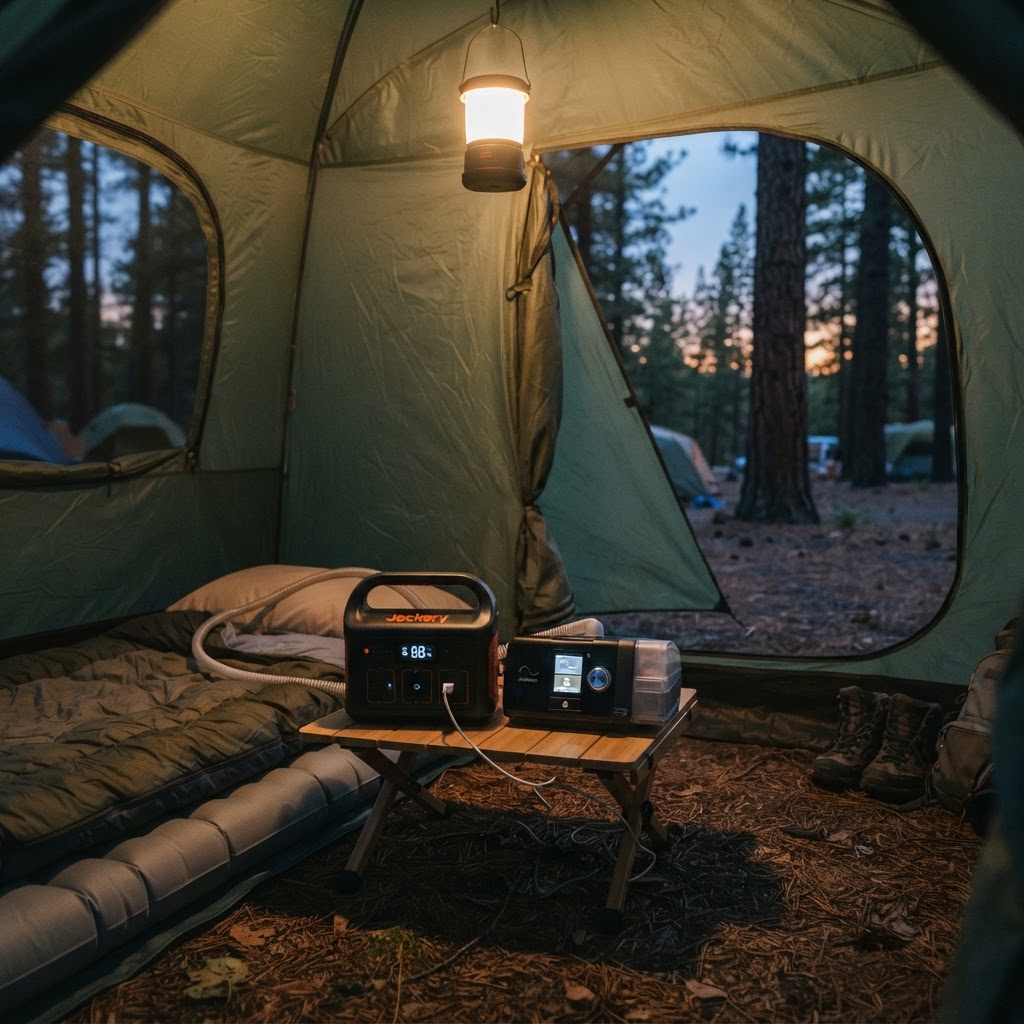
Top Picks This Round
Jackery Explorer 1000 v2 Portable Power Station
With 1070Wh of capacity, this upgraded LFP model offers massive peace of mind for 3+ nights even with humidifier use.
- +Massive 1070Wh capacity
- +Durable LiFePO4 battery upgrade
- +Compact form factor for its power
EF ECOFLOW DELTA 2
A versatile 1kWh powerhouse that can be expanded with extra batteries, making it the perfect bridge between camping and home backup.
- +Expandable capacity up to 3kWh
- +Powers 90% of home appliances
- +EPS mode for backup power
Anker SOLIX C1000 Portable Power Station
Anker's flagship medium-capacity unit features ultra-durable InfiniPower technology and enough overhead for CPAP plus electronics.
- +Unmatched 5-year full warranty
- +HyperFlash 58-minute recharging
- +High-quality internal components
Goal Zero Yeti 700 Portable Power Station
Built for the outdoors, the Yeti 700 offers professional-grade build quality and precise voltage regulation for sensitive medical equipment.
- +Rugged, weather-resistant build
- +Tier 1 battery cell quality
- +Excellent port selection
The short answer: if you want the best portable power station for CPAP use on a 3-day camping trip, I’d start with the BLUETTI Portable Power Station AC70 for the best overall balance of runtime, battery chemistry, and size. If you want the most cushion for three nights without stressing about every watt-hour, the Jackery Explorer 1000 v2 Portable Power Station is the safer play.
When I help people shop for CPAP power, I always come back to the same three questions: are you running DC or AC, are you using the humidifier or heated tube, and how much margin do you want before bed on night three? Those answers matter more than marketing claims, because CPAP runtime can swing a lot depending on settings and whether you’re wasting power through an inverter.
I also want to be upfront about how I built this list. These picks are based on manufacturer specs, official product documentation, and consistent patterns in verified customer reviews, not hands-on testing by this site. My goal here is simple: help you avoid underbuying, especially if you’re using a portable power station for medical devices where reliability matters more than fancy features.
Quick Comparison
| Product | Best For | Key Spec | value tiers |
|---|---|---|---|
| Jackery Explorer 1000 v2 Portable Power Station | Best for 3-night comfort | 1070Wh LiFePO4 battery | Premium |
| EF ECOFLOW DELTA 2 | Best for home & camp versatility | 1kWh expandable system | Mid-range |
| Anker SOLIX C1000 Portable Power Station | Best premium | 1kWh class with fast recharge | Premium |
| Goal Zero Yeti 700 Portable Power Station | Best for medical reliability | 700Wh class rugged build | Mid-range |
| BLUETTI Portable Power Station AC70 | Best overall | 764Wh LiFePO4 battery | Mid-range |
| Jackery Explorer 500 Portable Power Station | Best budget | 500Wh class compact unit | Budget |
| EF ECOFLOW River 2 Pro | Best for fast recharging | 768Wh LiFePO4 with rapid AC charging | Budget |
1. Jackery Explorer 1000 v2 Portable Power Station — Best for 3-night comfort
If your main goal is to get through three nights without lying awake doing battery math, this is the easy recommendation. The Jackery Explorer 1000 v2 Portable Power Station gives you 1070Wh of capacity, which is enough cushion that even people who occasionally use a humidifier or heated tube have a better shot at making it through a long weekend than they would with the 500Wh to 700Wh class units.
What I like here is the balance. It’s still portable, but it’s playing in a different confidence category than the Jackery Explorer 500 Portable Power Station. The 500 is the lighter, cheaper option, but the 1000 v2 is the one I’d choose if missing a night of therapy is not something I want to risk. Compared with the BLUETTI Portable Power Station AC70, you’re buying more breathing room, not necessarily better portability.
The trade-off is obvious: more battery means more cost and more weight. If you know you’ll always run your CPAP in DC mode with humidity off, this may be more station than you need. But for three-night comfort, especially for users who don’t want to micromanage every setting, this one earns its spot.
Pros:
- Big 1070Wh capacity gives real peace of mind for multi-night CPAP use
- LiFePO4 battery chemistry is a meaningful durability upgrade
- Compact footprint for a power station in this capacity class
Cons:
- Costs more than the smaller CPAP-focused options
- Noticeably heavier than the 500-class units
2. EF ECOFLOW DELTA 2 — Best for home & camp versatility
The EF ECOFLOW DELTA 2 makes the most sense for the person who wants one power station to do double duty. On a camping trip, it can handle a CPAP with plenty of reserve. Back at home, it can also cover more household tasks and can even grow with expansion batteries later. That flexibility is what separates it from something like the BLUETTI Portable Power Station AC70, which I like better as a pure camping buy.
For CPAP-only duty, though, I’ll be honest: the DELTA 2 is more than many people need. If your sole use case is sleeping three nights with a machine and maybe charging a phone, the extra capability may just mean extra bulk in the tent or car. Compared with the Jackery Explorer 1000 v2 Portable Power Station, it gives up a little of that simple “I have plenty of battery” feel, but adds the appeal of expandability and home-backup usefulness.
I’d put this in the sweet spot for people who camp a few times a year but also want emergency backup at home. If you like the idea of one box serving both jobs, the DELTA 2 is easier to justify than a more single-purpose unit.
Pros:
- Expandable capacity gives you room to grow well beyond camping use
- Can run most common home appliances, not just small electronics
- EPS mode adds backup-power usefulness at home
Cons:
- More power station than most CPAP-only campers really need
- A bit bulky if you’re tight on tent or vehicle space
3. Anker SOLIX C1000 Portable Power Station — Best premium
The Anker SOLIX C1000 Portable Power Station is the premium pick for people who care about long-term ownership as much as weekend runtime. What stands out most is the 5-year full warranty, which is unusually reassuring in this category. If I were shopping with medical-use reliability in mind and wanted something I’d keep for years, that warranty would matter.
Capacity-wise, it sits in the same general class as the EF ECOFLOW DELTA 2 and not far from the Jackery Explorer 1000 v2 Portable Power Station. The difference is in personality. The Anker leans premium, polished, and fast, especially with its very quick recharge time. If you want a medium-capacity station that can power a CPAP plus the usual camping electronics without feeling entry-level, it’s an appealing option.
The catch is that you pay for that premium feel, and Anker’s app-and-firmware ecosystem can be a little more involved than some buyers want. If you want simple and proven, the Jackery models may feel more straightforward. If you want strong support, fast charging, and a long warranty, the Anker makes a solid case.
Pros:
- Standout 5-year full warranty adds long-term confidence
- Very fast recharge can be handy between trips or at powered campsites
- Strong internal component quality and durable design approach
Cons:
- Priced like a premium model
- Firmware updates are often part of the ownership experience
4. Goal Zero Yeti 700 Portable Power Station — Best for medical reliability
The Goal Zero Yeti 700 Portable Power Station is the one I’d point to for buyers who put build quality and electrical stability ahead of getting the absolute most watt-hours per dollar. Goal Zero has always leaned toward rugged, outdoor-ready gear, and that matters if your power station will be hauled in and out of vehicles, set on dusty ground, and used in variable weather.
For CPAP use specifically, this one stands out as a conservative choice. Its positioning as a portable power station for medical devices makes sense because the focus here is less on flashy capacity and more on dependable operation and solid voltage regulation for sensitive electronics. Compared with the BLUETTI Portable Power Station AC70, you’re paying more per watt-hour. Compared with the Jackery Explorer 500 Portable Power Station, you’re getting a more robust build but not necessarily the budget value.
The one annoyance worth knowing up front is the proprietary side of Goal Zero’s solar setup. If you plan to recharge with panels later, pay close attention to the cable situation. For buyers who mainly want a sturdy CPAP power source and are less worried about chasing the lowest cost per Wh, it’s still a respectable choice.
Pros:
- Rugged, weather-resistant design feels aimed at real outdoor use
- High-grade battery cells support a reliability-first approach
- Strong port selection makes it easy to run a CPAP and small extras
Cons:
- Costs more than some rivals once you compare capacity directly
- Solar charging can involve proprietary input cables
5. BLUETTI Portable Power Station AC70 — Best overall
If I had to recommend one unit to the widest number of campers, it would be the BLUETTI Portable Power Station AC70. This is the best overall because it lands in the sweet spot: enough capacity at 764Wh for many 3-day CPAP trips, LiFePO4 chemistry for better cycle life, and a size that still feels manageable for camping rather than home-backup duty.
What really helps it in this use case is its efficient DC output for CPAP use. That matters more than people think. A lot of runtime disappointment comes from running a CPAP on AC when a proper DC cord would have squeezed out another night or at least a safer margin. Against the Jackery Explorer 500 Portable Power Station, the AC70 gives you a healthier battery reserve and newer chemistry. Against the Jackery Explorer 1000 v2 Portable Power Station, it’s easier on the wallet and easier to move around.
It also gets my nod for people searching for the quietest solar generator for tent camping, at least among the options here, because silent operation in power-saving mode is a real perk when you’re sleeping next to it. It’s not the biggest unit on the list, and it’s a little heavier than some similarly sized rivals, but for three-night CPAP duty with smart settings, it’s the best-balanced choice.
Pros:
- High-efficiency DC output is a strong match for CPAP runtime
- LiFePO4 battery offers 3000+ cycle longevity
- Silent operation in power-saving mode is tent-friendly
Cons:
- A little heavier than some competing units in its class
- The mobile app depends on Bluetooth, which not everyone likes
6. Jackery Explorer 500 Portable Power Station — Best budget
The Jackery Explorer 500 Portable Power Station is still one of the most common names people bring up for CPAP camping, and there’s a reason for that. It’s compact, proven, easy to understand, and typically affordable enough that it doesn’t feel like a huge leap. If you’re trying to solve one problem on a reasonable budget, it remains a very practical answer.
This is also where the common runtime question comes in: how long will a 500Wh power station run a CPAP? The honest answer is that it depends heavily on the machine, pressure settings, humidity, and whether you use a 12V DC cord. In general, a 500Wh class unit can often cover multiple nights with humidity off and DC connection, but not every setup will make three nights comfortably. That’s why the Jackery 500 CPAP runtime reputation is strongest when users skip the inverter losses and keep heat features off.
Compared with the BLUETTI Portable Power Station AC70 or EF ECOFLOW River 2 Pro, you’re giving up LiFePO4 chemistry and some extra capacity. But you’re getting a compact, well-known option that many buyers still trust for basic CPAP duty. If budget is your main filter and you’re realistic about your settings, this is still the value pick.
Pros:
- Well-established reputation for powering medical devices reliably
- Very compact and easy to carry into camp
- Customer support is consistently viewed as a strong point
Cons:
- Uses older NMC battery chemistry instead of LiFePO4
- AC recharging is slower than newer competitors
7. EF ECOFLOW River 2 Pro — Best for fast recharging
The EF ECOFLOW River 2 Pro is the pick for people who know they’ll have some chance to top off between nights. Maybe your campground has powered restrooms, a lodge, or an outlet near the car. In that kind of real-world camping, the River 2 Pro’s fast recharge is genuinely useful and can matter more than having the absolute biggest battery on day one.
Its 768Wh capacity puts it right in the same conversation as the BLUETTI Portable Power Station AC70, and I’d compare those two directly before buying. The BLUETTI feels a bit more CPAP-focused because of its quiet, efficient character. The River 2 Pro fights back with much faster AC charging and a very informative display, which some users will appreciate when they’re closely managing overnight usage.
The main knock is fan noise during that fast charging. If you’re charging it in camp while trying to keep things quiet, you’ll notice it more than you would on the BLUETTI. Still, for campers who can recharge between sleeps, it’s one of the easiest ways to get a lighter, reasonably priced unit to act bigger than it is.
Pros:
- Among the fastest recharge times in this size class
- LiFePO4 cells bring better lifespan than older NMC packs
- The LCD gives clear, useful runtime and input/output information
Cons:
- The fan can get loud during high-speed charging
- Initial app setup can be a little finicky
How I Picked These
I didn’t build this list around hype features. For CPAP camping, I care first about usable battery capacity in watt-hours, because that’s what determines whether you’re sleeping through night three or rationing power on night two. Rated watts matter too, but far less for a CPAP than they would for running heavy appliances.
I also put a lot of weight on battery chemistry. LiFePO4 is usually the better fit for people who expect to keep their station for years, because it generally offers much longer cycle life than older NMC designs. That doesn’t make NMC automatically bad; the Jackery Explorer 500 Portable Power Station is still here because its size, track record, and value remain compelling for lighter-duty use.
Then I looked at solar input, portability, and value per watt-hour. Solar input matters if you’ll actually recharge in the field, but for a 3-day trip, many people are really choosing between carrying more battery now or dealing with solar later. Finally, I leaned on manufacturer specs, official product documentation, and verified customer-review patterns to see which units people repeatedly turn to for CPAP use, home backup crossover, or quiet tent camping.
Things to Watch Out For
These are the mistakes I see buyers make over and over when choosing a CPAP battery station.
- Confusing Wh with W. Watt-hours tell you roughly how long the station can run your CPAP. Watts tell you how much power it can deliver at once. For overnight therapy, Wh is usually the more important number.
- Ignoring AC vs DC losses. A CPAP run from the AC inverter often burns more energy than the same machine on a proper 12V or DC adapter. That single choice can be the difference between making it through the trip and falling short.
- Assuming advertised runtime equals real runtime. Real-world runtime drops with humidifiers, heated hoses, cold weather, inverter use, and battery reserve behavior. Always leave yourself margin.
- Overestimating solar recharging. Solar input limits, cloud cover, panel angle, and short winter days all matter. A power station that accepts solar is not the same thing as a station that will fully recover every day at camp.
- Buying for peak output instead of your actual use case. Big surge numbers sound impressive, but a CPAP doesn’t need them. If medical use is the priority, spend your money on capacity, efficient outputs, and reliable battery chemistry instead.
Frequently Asked Questions
How long will a 500Wh power station run a CPAP?
Short answer: often 1 to 3 nights, depending on the machine and settings. The biggest factors are whether you use a DC cord, and whether humidity or a heated tube are turned off or on.
Is a 500Wh unit enough for a 3-day CPAP camping trip?
Short answer: sometimes, but it’s tight. A 500Wh class station like the Jackery Explorer 500 Portable Power Station can make sense for efficient setups, but a 700Wh to 1000Wh unit gives far more margin for a real three-night trip.
What is the quietest solar generator for tent camping?
Short answer: among these picks, the BLUETTI Portable Power Station AC70 stands out for quiet use because of its silent power-saving mode. That matters if the station will sit inside the tent or right beside your sleeping setup.
What is the best portable power station for medical devices like a CPAP?
Short answer: the best one is the model that gives you enough capacity with the fewest failure points. For most campers, that means a LiFePO4 unit with solid DC output and enough watt-hours to cover your full trip without depending on perfect conditions.
What kind of Jackery 500 CPAP runtime should I expect?
Short answer: expect the best results when using a 12V DC cord and turning off heated features. In that setup, many users report multi-night use, but heavy humidity use can cut runtime much faster than people expect.
The Verdict
Best overall: BLUETTI Portable Power Station AC70. It hits the best balance of CPAP-friendly capacity, LiFePO4 longevity, and quiet tent use. Check today’s prices on Amazon →
Best budget: Jackery Explorer 500 Portable Power Station. It’s still the simple, compact answer for campers who want a proven CPAP option without spending big. Check today’s prices on Amazon →
Best premium: Anker SOLIX C1000 Portable Power Station. The long warranty, strong build quality, and fast recharge make it the premium pick if you want a longer-term buy. Check today’s prices on Amazon →
If you want the least stress for a full three nights, I’d also keep the Jackery Explorer 1000 v2 Portable Power Station near the top of your list. More than anything, give yourself margin. CPAP camping is one place where “just enough on paper” is usually not enough in real life.
Related Guides
- Best 1000Wh Power Stations for Home Backup and Camping
- LiFePO4 vs NMC Batteries: Which Lasts Longer in a Power Station?
- How to Size a Portable Power Station for Overnight Medical Devices
- Best Quiet Solar Generators for Tent Camping and Light Sleepers
All Featured Products
Jackery Explorer 1000 v2 Portable Power Station
With 1070Wh of capacity, this upgraded LFP model offers massive peace of mind for 3+ nights even with humidifier use.
- +Massive 1070Wh capacity
- +Durable LiFePO4 battery upgrade
- +Compact form factor for its power
EF ECOFLOW DELTA 2
A versatile 1kWh powerhouse that can be expanded with extra batteries, making it the perfect bridge between camping and home backup.
- +Expandable capacity up to 3kWh
- +Powers 90% of home appliances
- +EPS mode for backup power
Anker SOLIX C1000 Portable Power Station
Anker's flagship medium-capacity unit features ultra-durable InfiniPower technology and enough overhead for CPAP plus electronics.
- +Unmatched 5-year full warranty
- +HyperFlash 58-minute recharging
- +High-quality internal components
Goal Zero Yeti 700 Portable Power Station
Built for the outdoors, the Yeti 700 offers professional-grade build quality and precise voltage regulation for sensitive medical equipment.
- +Rugged, weather-resistant build
- +Tier 1 battery cell quality
- +Excellent port selection
BLUETTI Portable Power Station AC70
A robust 764Wh LFP power station that balances weight and capacity perfectly for three nights of CPAP use with DC efficiency.
- +High-efficiency DC output for CPAP
- +LiFePO4 battery with 3000+ cycles
- +Silent operation in power-saving mode
Jackery Explorer 500 Portable Power Station
The industry standard for lightweight CPAP power, capable of running a standard machine for 3 nights when using a 12V DC power cord.
- +Proven reliability for medical devices
- +Extremely compact and easy to carry
- +Excellent customer support
EF ECOFLOW River 2 Pro
Featuring X-Stream technology, this 768Wh unit recharges fully in just 70 minutes, ideal for topping off at camp facilities between nights.
- +Fastest recharge in its class
- +Long-lasting LFP battery cells
- +Highly informative LCD display
Frequently Asked Questions
How long will a 500Wh power station run a CPAP?
Often 1 to 3 nights, depending on the machine, pressure, and whether you use humidity or a heated tube. Using a proper DC cord usually improves runtime versus running through the AC inverter.
Is a 500Wh unit enough for a 3-day CPAP camping trip?
Sometimes, but it can be tight. A 500Wh class unit may work for efficient CPAP setups with heated features off, while a 700Wh to 1000Wh station gives much more margin.
What is the quietest solar generator for tent camping?
Among these picks, the BLUETTI Portable Power Station AC70 stands out for quiet use thanks to its silent power-saving mode. That makes it especially appealing when the station will sit close to where you sleep.
What is the best portable power station for medical devices like a CPAP?
The best choice is a station with enough watt-hours for your full trip, stable output, and preferably LiFePO4 battery chemistry for long-term durability. For most campers, that means prioritizing capacity and efficient DC use over flashy surge ratings.
What kind of Jackery 500 CPAP runtime should I expect?
The best Jackery 500 CPAP runtime usually comes from using a 12V DC cord and turning off heated features. Many users get multi-night performance in that setup, but humidifier use can cut runtime substantially.